
Quick Summary
Reducing humidity in home requires looking beyond temporary fixes like portable dehumidifiers, as excessive indoor moisture in Central Texas is primarily driven by humid outdoor air entering through unsealed attics and crawl spaces. The most effective way to stabilize indoor relative humidity within the recommended 30% to 50% range is sealing structural envelope leaks and installing heavy-duty crawl space vapor barriers. Readers will understand how targeted building envelope remediation stops moisture intrusion and can schedule a free, no-obligation assessment with Super Green Insulation Austin to identify vulnerabilities in their attics and crawl spaces.
Reducing Humidity in Home: How to Stop Moisture Fast
If you want a lasting fix for high indoor humidity, the real solution comes down to sealing your home’s thermal envelope and installing a crawl space vapor barrier. Most homes see moisture levels stabilize within 24 to 48 hours once structural air leaks are sealed, with project costs typically running between $1,500 and $5,000.
Relying solely on portable dehumidifiers or lowering your thermostat rarely solves the root issue. Those approaches only condition the air already trapped in your living space while ignoring the structural gaps pulling humid air inside. In the humid Central Texas climate, unsealed attics and vented dirt crawl spaces act as open funnels for outdoor moisture.
Super Green Insulation Austin stops moisture intrusion at the source through attic air sealing, dedicated vapor barriers, and crawl space remediation. With clear upfront pricing, a rapid 30-to-60-minute response window, and a 100 percent satisfaction guarantee, our certified team helps you regain control of your indoor air. Schedule your free, no-obligation insulation and moisture assessment to pinpoint where humid air enters your home.
What Is the Fastest Way to Reduce Indoor Humidity?
The quickest immediate steps to dry out indoor air include running bathroom and kitchen exhaust fans, fixing visible plumbing leaks, and setting up portable dehumidifiers. For a permanent fix, however, you have to seal the building envelope. Combining attic air sealing with a crawl space vapor barrier blocks outdoor moisture from pushing through your ceilings and subfloors.
Targeting the Ideal Indoor Humidity Level (30% to 50%)
The U.S. Environmental Protection Agency (EPA) recommends maintaining indoor relative humidity between 30% and 50%. When moisture climbs past 55% or 60%, your home becomes vulnerable to mold growth, dust mite blooms, and structural wood rot. Managing moisture levels in winter is generally simpler because cold outdoor air holds less moisture, but keeping levels balanced across every season protects your framing and prevents wood rot year-round.
Why Lowering the AC Thermostat Backfires
When rooms feel muggy and sticky, many homeowners drop the thermostat down a few degrees. While an air conditioner does pull water vapor out of the air as it runs, lowering the temperature without fixing air leaks creates new problems. The AC cools the space quickly and shuts off before it can pull enough water from the air. This short-cycling leaves your rooms uncomfortably cold, clammy, and damp.
To take control of indoor moisture effectively, use this three-part strategy:
- Run mechanical exhaust fans during high-moisture tasks like cooking, boiling water, and showering, letting them run for 15 to 20 minutes afterward.
- Repair plumbing drips right away and check your exterior grading to make sure rainwater drains away from your foundation.
- Seal thermal bypasses between the attic and living areas to block outdoor humidity right at the building boundary.
Why Central Texas Homes Trap High Humidity and Moisture
Need reducing humidity in home?
We’re available now — call for a fast, free estimate.
Homes in Austin and across Central Texas frequently fight high indoor humidity because hot, muggy outdoor air forces its way through tiny gaps throughout the house. When attics and crawl spaces are left open to the elements, outdoor moisture drifts indoors around the clock, overworking your air conditioner and making plug-in dehumidifiers feel useless.
Attic-to-Living-Space Thermal Bypasses
During long Texas summers, the stack effect often works in reverse. Superheated attic air laden with moisture gets pushed downward into your cool, air-conditioned living spaces. Common entry points include unsealed recessed light fixtures, electrical wire penetrations, plumbing chases, and gaps along drywall top plates. Building science data from the U.S. Department of Energy shows that unsealed ceiling penetrations account for a large share of residential air leakage, allowing gallons of moisture vapor to enter conditioned living areas every day. Dropping your thermostat setpoint simply widens the temperature difference, pulling even more muggy attic air straight through your ceilings.
Unsealed Crawl Spaces and Rising Ground Moisture
Homes built on pier-and-beam foundations, common in older Austin neighborhoods, frequently battle high indoor humidity caused by bare dirt crawl spaces. Exposed soil acts as an open sponge, letting ground moisture evaporate straight up through subflooring and floor joists. Over time, this constant vapor drive leads to cupped hardwood floors, musty odors, and damaged floor framing, while attracting moisture ants and wood-decay fungi.
Pest Damage and Degraded Insulation
Standard fiberglass batts do not stop air or moisture movement once building seals fail. When rodents or insects nest in an attic, they burrow through the insulation, opening direct pathways for humid air to reach drywall surfaces. This structural damage makes controlling indoor moisture frustrating during summer heatwaves and upsets balanced indoor humidity in winter. Keeping indoor air stable requires continuous air barriers and crawl space encapsulation rather than damaged, loose fiberglass.
Comparing Methods for Lowering Indoor Humidity and Moisture
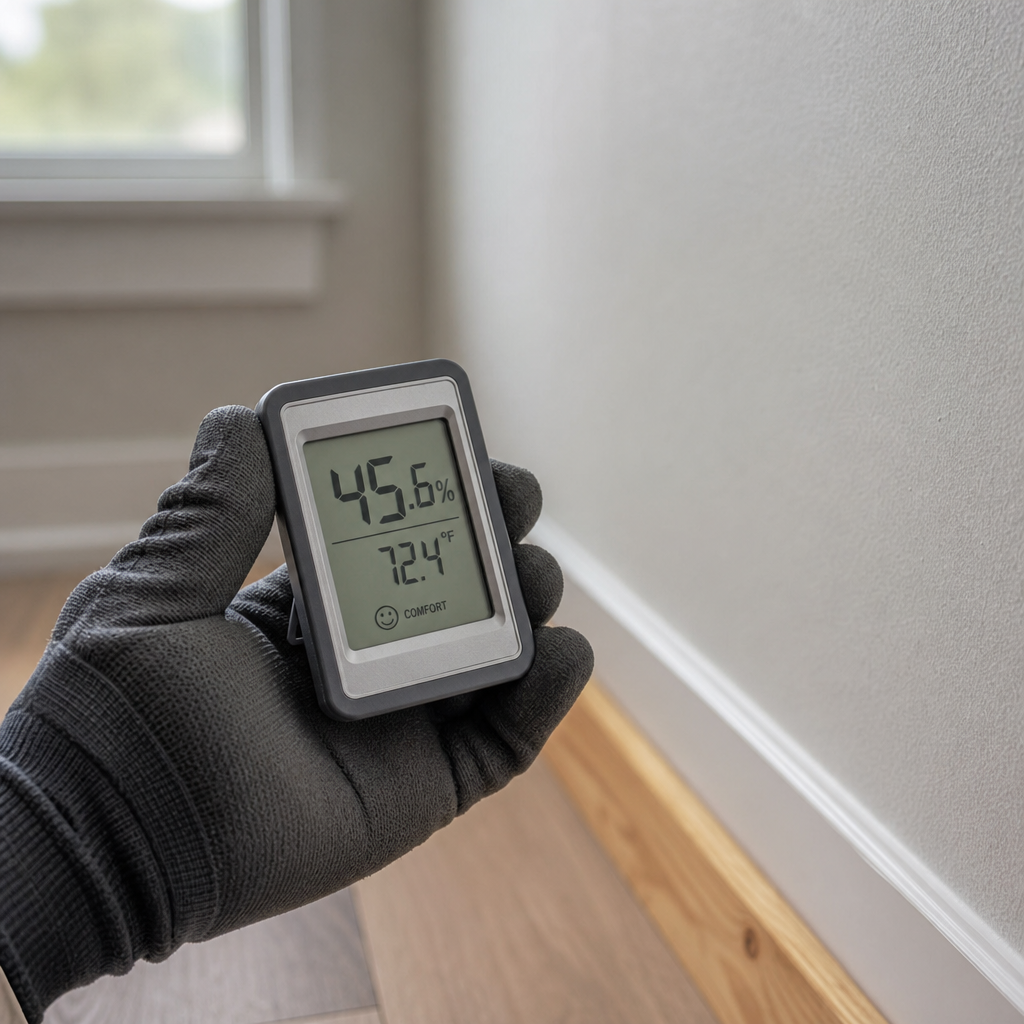
Managing indoor humidity for the long haul means stopping outdoor air infiltration rather than constantly trying to dry out the air after the fact. While portable appliances can help in a single room, securing the building envelope with air sealing, ground vapor barriers, and closed-cell spray foam cuts off moisture at the source.
| Feature | Portable Dehumidifiers | Lowering AC Thermostat | Envelope Sealing & Vapor Barrier |
|---|---|---|---|
| Root-Cause Fix | No (temporary band-aid) | No (causes short-cycling) | Yes (permanent physical barrier) |
| Operating Energy Cost | Adds $30 to $50 per month | Spikes monthly electric bills | Lowers ongoing utility bills |
| Crawl Space Protection | None | None | Continuous ground barrier |
| HVAC Equipment Impact | Neutral | Increases wear and tear | Reduces system workload |
Portable Dehumidifiers vs. Envelope Sealing
Setting up a portable dehumidifier in a sticky bedroom only treats the symptom after humid air has already entered your home. Running the AC at lower temperatures cools interior drywall surfaces too far, creating cold spots where humid air condenses inside wall cavities. The U.S. Department of Energy reports that air infiltration accounts for up to 40% of a home’s total heating and cooling energy loss, confirming that unsealed gaps constantly pull in outdoor moisture. Without envelope repairs, indoor humidity will remain an ongoing battle.
Spray Foam and Vapor Barrier Solutions
Maintaining balanced humidity levels year-round requires an unbroken thermal and air barrier. These structural upgrades directly fix how air moves through your home:
- Closed-Cell Spray Foam: Forms an impermeable air barrier and a Class II vapor retarder, stopping bulk moisture and hot airflow through attic roof decks and wall penetrations.
- Heavy-Duty Ground Vapor Retarders: Lining crawl spaces with thick, puncture-resistant barrier sheets stops ground moisture from evaporating up into your floor framing.
- Top-Plate and Chase Sealing: Closes off major attic bypasses with expanding foam, breaking the pressure cycle that draws outdoor vapor into your living areas.
Professional Moisture Mitigation: Costs, Timelines, and ROI
Need reducing humidity in home?
We’re available now — call for a fast, free estimate.
Professional moisture mitigation generally costs between $1,500 and $5,000, bringing indoor humidity into a healthy range within 24 to 48 hours after installation. Sealing your building envelope delivers a dependable return on investment by cutting air leaks, shortening HVAC runtimes, and protecting your framing from expensive mold remediation.
What to Expect During a Professional Assessment
A diagnostic assessment looks beyond surface humidity readings to locate the structural leaks letting moisture inside. Certified technicians follow an organized inspection process:
- Thermal and envelope inspection: Checking attic top plates, duct chases, light fixtures, and crawl spaces for incoming humid air.
- Customized scope of work: Evaluating square footage, ground dampness, attic access points, and insulation condition to build an accurate plan.
- Direct recommendations: Explaining permanent measures to control indoor humidity without relying on endless short-term appliances.
Transparent Pricing and Project Turnaround
Super Green Insulation Austin provides free in-home estimates with clear pricing and zero hidden fees, supported by a 30-to-60-minute local response window. Most attic air sealing and crawl space barrier installations take just one to two days to complete, handled by licensed, background-checked technicians.
According to the EPA ENERGY STAR program, air-sealing a home and adding proper insulation saves homeowners an average of 15% on heating and cooling costs. This upgrade keeps indoor humidity steady in both winter and summer while protecting your home’s structural framing for decades to come.
Frequently Asked Questions About Home Humidity Control in Austin
What is the ideal home humidity level in winter versus summer?
According to the EPA, indoor relative humidity should stay between 30% and 50% year-round. Aim for 45% to 50% during hot summer months to keep the air feeling crisp, and drop down to 30% to 40% during winter cold snaps to prevent condensation on cold window glass and exterior walls.
Can poor attic insulation cause moisture ants and wood rot?
Yes. Missing or damaged attic insulation allows warm, humid air to collide with cooler drywall and framing surfaces, creating condensation. Moisture ants are attracted to damp, softened wood and wet cellulose. Sealing attic air leaks dries out the framing and eliminates the moisture these pests require.
Does spray foam insulation prevent high indoor humidity?
Spray foam stops air movement, but the type of foam matters. Open-cell foam blocks airflow while allowing water vapor to pass through slowly. Two-pound closed-cell foam creates an air barrier and a vapor retarder in one application, making it an excellent choice for keeping intense Central Texas humidity outside.
When your air conditioner runs constantly without clearing the sticky, heavy feeling in your rooms, air leakage around your building envelope is almost always the cause. Super Green Insulation Austin provides prompt, transparent service across the Austin area. Reach out today to schedule a detailed assessment and stop unwanted indoor moisture fast.
Need reducing humidity in home?
We’re available now — call for a fast, free estimate.
Related reading: Home Humidity Levels in Winter | Call Now-10% Off | Same-Day Service | Free Estimate
Related reading: Home Humidity in Winter – 10% Off & Free Estimate – Same-Day Service
Related reading: Home Humidity – 10% Off & Free Estimate – Same-Day Service
Frequently Asked Questions
How can I tell whether excess indoor moisture is coming from my attic or the crawl space?
Moisture rising from dirt crawl spaces typically presents as musty odors, damp subflooring, or cupped wood floors, whereas attic-driven humidity causes stuffy ceilings and moisture buildup around recessed lighting and top plates. Super Green Insulation Austin provides diagnostic moisture assessments that inspect structural air bypasses and ground dampness across both zones.
Does setting the HVAC fan to the ON position help lower indoor humidity?
No, running the HVAC fan on the "ON" setting continuously circulates air over damp evaporator coils, blowing captured water droplets right back into your living areas. Keeping your fan set to "AUTO" allows condensation to drain outdoors, while structural envelope sealing stops humid outdoor air from replenishing that moisture.
What thickness of crawl space vapor barrier is needed to block ground moisture effectively?
A continuous, puncture-resistant polyethylene barrier between 10 and 20 mil thick is recommended to stop ground evaporation and withstand foot traffic during maintenance. Super Green Insulation Austin installs heavy-duty ground retarders sealed along foundation walls and piers to create a permanent moisture defense.
About the author
 |
Marcus Donovan Marcus Donovan is a certified energy auditor and home performance specialist with over 12 years of experience in the Austin construction industry. He holds a Bachelor of Science in Construction Management from Texas State University and focuses on residential and commercial energy efficiency. His practical knowledge covers everything from attic insulation retrofits to complex moisture control systems. |