
Quick Summary
Lowering humidity in a house is essential for preventing mold growth, allergen proliferation, and structural damage caused by outdoor moisture infiltrating through unsealed building envelopes. While immediate habits like operating exhaust fans and setting HVAC blowers to AUTO provide quick relief, permanent moisture defense requires sealing attic bypasses, installing crawl space vapor barriers, and upgrading insulation with Super Green Insulation Austin. Readers will understand how to maintain the EPA-recommended 30% to 50% indoor humidity range and know when to schedule a professional home moisture inspection to resolve persistent humidity issues.
Lowering Humidity in House: 8 Ways to Stop Moisture Fast
When high indoor humidity makes your home feel sticky or clammy, running to the hardware store for a portable dehumidifier is usually the first reaction. But in hot, humid climates, excessive moisture inside a house is rarely just an air conditioning issue. Outside air and ground moisture can enter through unsealed attic spaces, damp crawl spaces, and leaky ductwork, contributing to elevated indoor moisture levels.[4]
The U.S. Environmental Protection Agency (EPA) recommends keeping indoor relative humidity between 30% and 50%. Staying within this range helps prevent mold growth and maintain indoor comfort.[3]
Quick Summary: Ideal Levels and Immediate Fixes
To reduce moisture in the air, run bathroom exhaust fans after showers, switch your thermostat fan from “ON” to “AUTO,” and use a dehumidifier in problem areas. For longer-term management, specialists like Super Green Insulation Austin recommend air sealing the attic floor, ensuring proper insulation, sealing ductwork in unconditioned spaces, and covering exposed dirt in crawl spaces with a vapor barrier.[2]
Target Humidity Levels by Season
- Summer target: Keep relative humidity below 50%. Research suggests that maintaining relative humidity below 51% can materially reduce dust mite populations and allergen loads.
- Winter target: Keep humidity between 30% and 40% (or 30% to 35% in colder regions) to prevent window condensation. Indoor humidity below 30% can occur in winter and may irritate skin and eyes.
Signs Your Home Has a Hidden Moisture Problem
If indoor humidity stays elevated, watch for these common warning signs:[5]
- A persistent musty odor in living areas, closets, or basements.
- Visible condensation on windows or supply registers.
- Dampness or warping in flooring and drywall.
- Presence of moisture-loving indoor pests.
Surface Fixes vs. Building Envelope Upgrades
A comparison of common moisture-control approaches:
| Approach | Initial Cost | Response Time | Energy Impact | Root Problem Solved? |
|---|---|---|---|---|
| Portable Dehumidifier | Low to Moderate | Immediate (single room) | Increases electric bill | No (treats symptoms only) |
| HVAC Adjustments & Fan Settings | Zero | Hours to Days | Neutral | Partially (restores coil drainage) |
| Air Sealing & Insulation | Moderate | Immediate once completed | Can reduce heating and cooling costs | Yes (reduces attic air infiltration) |
| Crawl Space Vapor Barrier | Moderate to Higher | Days | Reduces moisture load on living space | Yes (reduces ground moisture evaporation) |
1. Air Seal Attic Bypass Leaks and Chases
During warm seasons, unconditioned attic air can migrate into living spaces through gaps in ceilings around recessed lights, electrical penetrations, plumbing stacks, dropped soffits, and drywall seams. Sealing these bypasses with caulk or expanding foam helps prevent warm, humid attic air from infiltrating conditioned rooms.
2. Install a Vapor Retarder in the Crawl Space
Uncovered dirt under a home can release moisture into the air, which can migrate into living areas and contribute to elevated indoor humidity. Installing a durable vapor retarder over the crawl space floor helps minimize ground moisture evaporation into the structure.
3. Check and Level Attic Insulation
Missing, thin, or uneven attic insulation can create temperature variations across ceiling surfaces. As noted by Super Green Insulation Austin, maintaining proper, uniform insulation coverage helps keep ceiling temperatures consistent and reduces condensation risks.
4. Optimize HVAC Runtime, Fan Settings, and Sizing
Need lowering humidity in house?
We’re available now — call for a fast, free estimate.
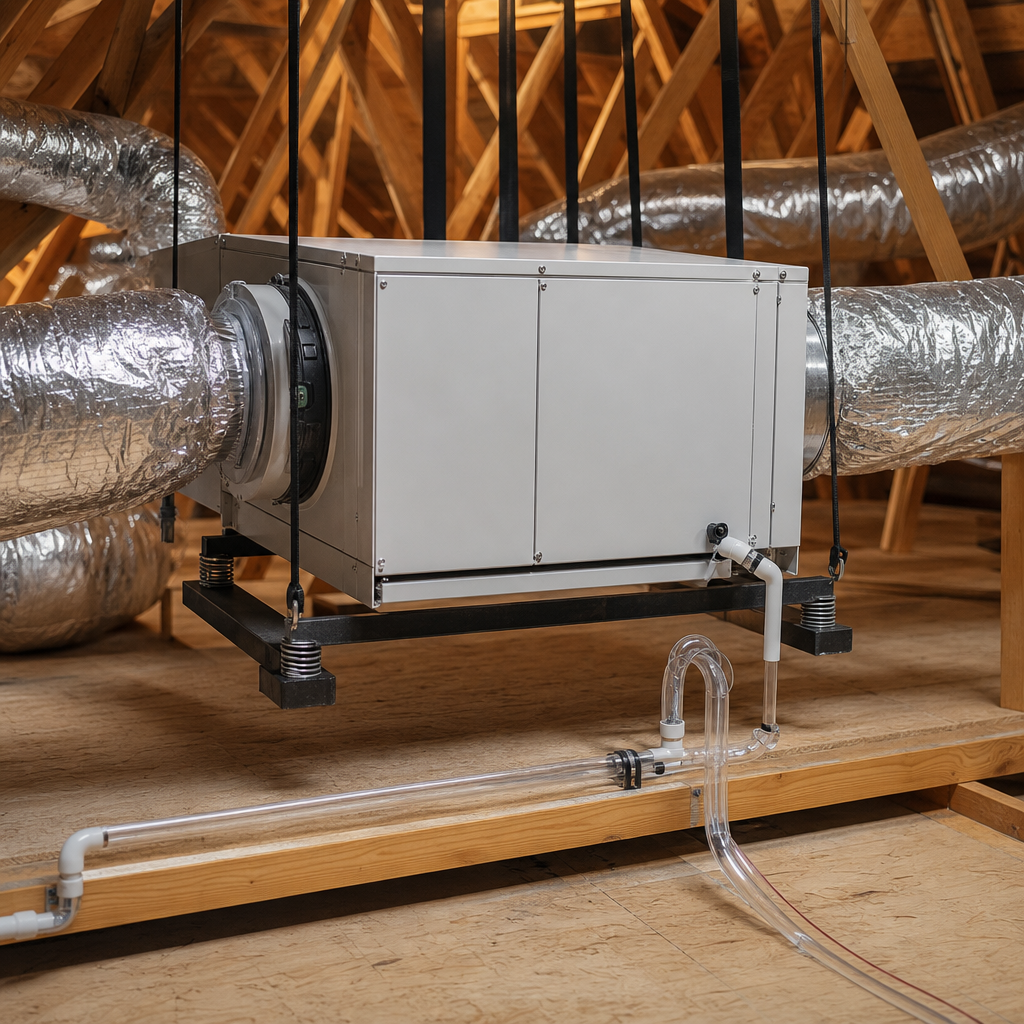
A central air conditioning system helps remove moisture as warm indoor air passes over the cold evaporator coil. However, proper operation and equipment sizing are critical for effective moisture removal:
- Keep the fan on “AUTO”: Setting the thermostat fan to “ON” runs the blower continuously, which can re-evaporate condensed moisture off the wet coil back into the home when the cooling cycle ends.
- Avoid oversized units: An oversized system can cool the home too quickly and shut off before completing an adequate dehumidification cycle (short-cycling).
- Maintain the condensate line: Regularly check and clear the drain line to avoid blockages and standing water.
5. Use Supplemental Dehumidification During Mild, Humid Weather
During moderate outdoor temperatures with high humidity, air conditioners may run infrequently because cooling is not required. A dedicated whole-home or portable dehumidifier helps control indoor moisture levels during these periods without overcooling the home.
6. Seal Leaking Return Air Ducts
Ductwork located in unconditioned spaces such as attics, garages, or crawl spaces can pull in hot, humid air through unsealed joints or cracks on the return side. Sealing duct connections with mastic or approved foil tape helps prevent unconditioned air from being drawn into the ventilation system.
7. Control Point-Source Moisture from Daily Living
Normal household activities add moisture to indoor air. Managing these sources helps maintain target humidity levels:
- Kitchen ventilation: Run the exhaust hood while cooking, boiling water, or running the dishwasher, ensuring it vents outdoors.
- Bathroom exhaust: Operate bathroom fans during and after showers to exhaust humid air.
- Dryer exhaust checks: Ensure clothes dryer vents are sealed, clear of lint, and exhaust directly outdoors.
- Indoor plants: Moderate the number of indoor plants in enclosed spaces to avoid excess humidity from transpiration.
8. Address Exterior Drainage and Foundation Grading
Water collecting around the foundation can increase moisture levels in basements and crawl spaces. Direct downspout runoff away from the foundation and maintain exterior soil grading that slopes away from the home to prevent water accumulation.
When to Schedule a Professional Moisture Assessment
If indoor humidity consistently remains high despite daily moisture control practices, a professional energy assessment from teams like Super Green Insulation Austin can help locate structural air leakage, duct defects, or crawl space moisture issues using diagnostic tools such as blower doors and thermal imaging.
Frequently Asked Questions
How can I lower humidity in my house quickly?
Turn on bathroom and kitchen exhaust fans, set the thermostat fan to “AUTO,” and run a dehumidifier in damp areas to help reduce indoor moisture levels promptly.
Why is indoor humidity high when the AC is running?
High humidity during AC operation often occurs when equipment is oversized and short-cycles, when return ducts in unconditioned spaces leak humid air into the system, or when the blower fan is set to “ON” rather than “AUTO.”
Does attic insulation and air sealing reduce indoor moisture?
Yes. Air sealing reduces the infiltration of warm, humid attic air into living areas, while adequate insulation helps maintain uniform surface temperatures and minimize condensation.
How does a crawl space vapor barrier help control home humidity?
Covering bare ground with a sealed vapor barrier prevents soil moisture from evaporating into the crawl space and migrating upward into the home.
What is the ideal indoor humidity level for comfort and safety?
The EPA recommends an indoor relative humidity range between 30% and 50%. Research suggests that maintaining relative humidity below 51% can materially reduce dust mite populations and allergen loads, while indoor humidity below 30% can occur in winter and may irritate skin and eyes.[1]
Need lowering humidity in house?
We’re available now — call for a fast, free estimate.
Sources
- Reducing relative humidity is a practical way to control dust … – pubmed.ncbi.nlm.nih.gov (2001)
- Impacts of Building Dampness on Indoor Air Quality – iaqscience.lbl.gov (2006)
- Care for Your Air: A Guide to Indoor Air Quality | US EPA – epa.gov
- INDOOR HUMIDITY LEVELS AND ASSOCIATIONS WITH … – stacks.cdc.gov
- Guidance for indoor air quality professionals – Canada.ca – canada.ca (2023)
Related reading: Home Humidity Levels in Winter | Call Now-10% Off | Same-Day Service | Free Estimate
Related reading: Home Humidity in Winter – 10% Off & Free Estimate – Same-Day Service
Related reading: Lowering Humidity – Call Now-10% Off – Same-Day Service – Free Estimate
Frequently Asked Questions
How do I know if high indoor humidity is caused by attic leaks or an HVAC problem?
High humidity accompanied by warm ceiling spots, uneven room temperatures, or drafts indicates attic air leakage, whereas rapid cooling cycles without adequate moisture removal suggest an oversized HVAC system. Super Green Insulation Austin uses thermal imaging and blower door diagnostics to pinpoint whether envelope penetrations or duct defects are allowing humid air to enter.
Why is a portable dehumidifier insufficient for long-term moisture control?
Portable dehumidifiers only treat ambient air in a single room and increase energy costs while leaving the underlying pathways of moisture infiltration open. Permanent moisture control requires addressing root structural issues through attic air sealing and crawl space vapor retarders installed by professionals like Super Green Insulation Austin.
How quickly will indoor humidity levels drop after air sealing and insulation upgrades?
Homeowners typically observe a noticeable reduction in indoor relative humidity within 24 to 48 hours following comprehensive air sealing and insulation improvements. Once structural infiltration is stopped, your existing HVAC system can efficiently regulate moisture to maintain the recommended 30% to 50% humidity range.
About the author
 |
Marcus Donovan Marcus Donovan is a certified energy auditor and home performance specialist with over 12 years of experience in the Austin construction industry. He holds a Bachelor of Science in Construction Management from Texas State University and focuses on residential and commercial energy efficiency. His practical knowledge covers everything from attic insulation retrofits to complex moisture control systems. |