
Quick Summary
Severe storms across Central Texas frequently force wind-driven rain into attic spaces, saturating insulation and triggering hidden mold growth within 24 to 48 hours. Super Green Insulation Austin provides 24/7 emergency restoration to quickly extract ruined insulation, sanitize framing with antimicrobial washes, and rebuild the home's thermal envelope. Homeowners will understand how to spot hidden moisture damage, navigate insurance claims for storm losses, and request immediate inspections to protect indoor air quality and energy efficiency.
Storm Damage Restoration in Austin: Attic & Home Recovery
When severe weather strikes Central Texas, securing reliable storm damage restoration in Austin quickly protects both your living space and your pocketbook. Professional recovery involves rapid water extraction, structural drying, and repairing the home’s thermal envelope. While Austin averages around 36.25 inches of precipitation each year, intense storm cells frequently drop several inches of rain in under an hour. That sudden volume drives water past rooflines and soffit vents, threatening attics and crawl spaces across neighborhoods from West Lake Hills to Pflugerville.[1]
Most property owners look for obvious roof punctures or drywall stains after a squall line blows through. However, extreme wind and pressure drops often push water deep into attic insulation without immediately dripping through the ceiling below. Below, you will find direct details on restoration costs, emergency response timelines, insurance claims, and the warning signs of hidden moisture damage.
What to Expect from Storm Damage Restoration
Storm damage restoration in Austin focuses on stabilizing the structure, stopping moisture spread, and restoring energy efficiency. Full recovery follows four practical stages:
- Water extraction and structural drying: Standing water is pumped out, and industrial air movers and dehumidifiers dry framing timbers and subfloors.
- Thermal envelope evaluation: Wet, matted insulation is assessed with moisture meters and thermal imaging to determine if it can be saved or requires disposal.
- Antimicrobial sanitization: Roof decking, joists, and exposed framing are treated with EPA-registered antimicrobial solutions to prevent mold and bacterial growth.
- Insulation replacement: Fresh blown-in fiberglass, cellulose, or spray foam is installed to restore the home’s R-value and keep utility bills under control during brutal summer heat.
How Quickly Can Emergency Restoration Crews Respond in Austin?
Need storm damage restoration in Austin?
We’re available now — call for a fast, free estimate.
In most residential areas across Austin, emergency crews aim to respond within a few hours of an initial call. Exact response times depend on the widespread severity of the storm, local road conditions, technician availability, and whether active hazards like downed power lines are present. Rapid response is vital because mold can begin colonizing wet organic materials within 24 to 48 hours in our humid subtropical climate.
Attic Moisture and Hidden Insulation Damage
Austin sits squarely in Flash Flood Alley, an area known for intense rainfall bursts. The National Weather Service identifies heavy rain and flash flooding as the primary tropical-storm hazards for Central Texas. During historic events like Hurricane Harvey in August 2017, Camp Mabry recorded 7.94 inches of rain, while Austin-Bergstrom International Airport registered 10.07 inches.[3]
During these high-wind downpours, water frequently forces its way beneath ridge vents, flashing, and soffits. The water soaks into loose-fill cellulose or fiberglass batts, acting like a giant sponge. Because the insulation holds the water directly above your sheetrock, the attic loses its thermal resistance immediately while creating a damp microclimate where mold thrives out of sight.
Austin Severe Weather and Seasonal Hazards
Austin’s main severe-weather season runs from March through May, with large hail and damaging straight-line winds presenting the most frequent threats. The City of Austin classifies flooding as the area’s single most serious hazard, noting that flood risks threaten the entire city throughout the year. In fact, city records note four major flood events within a single ten-year period, with models showing an ongoing increase in extreme-rainfall incidents.[4]
What Does Storm Damage Restoration Cost in Austin?
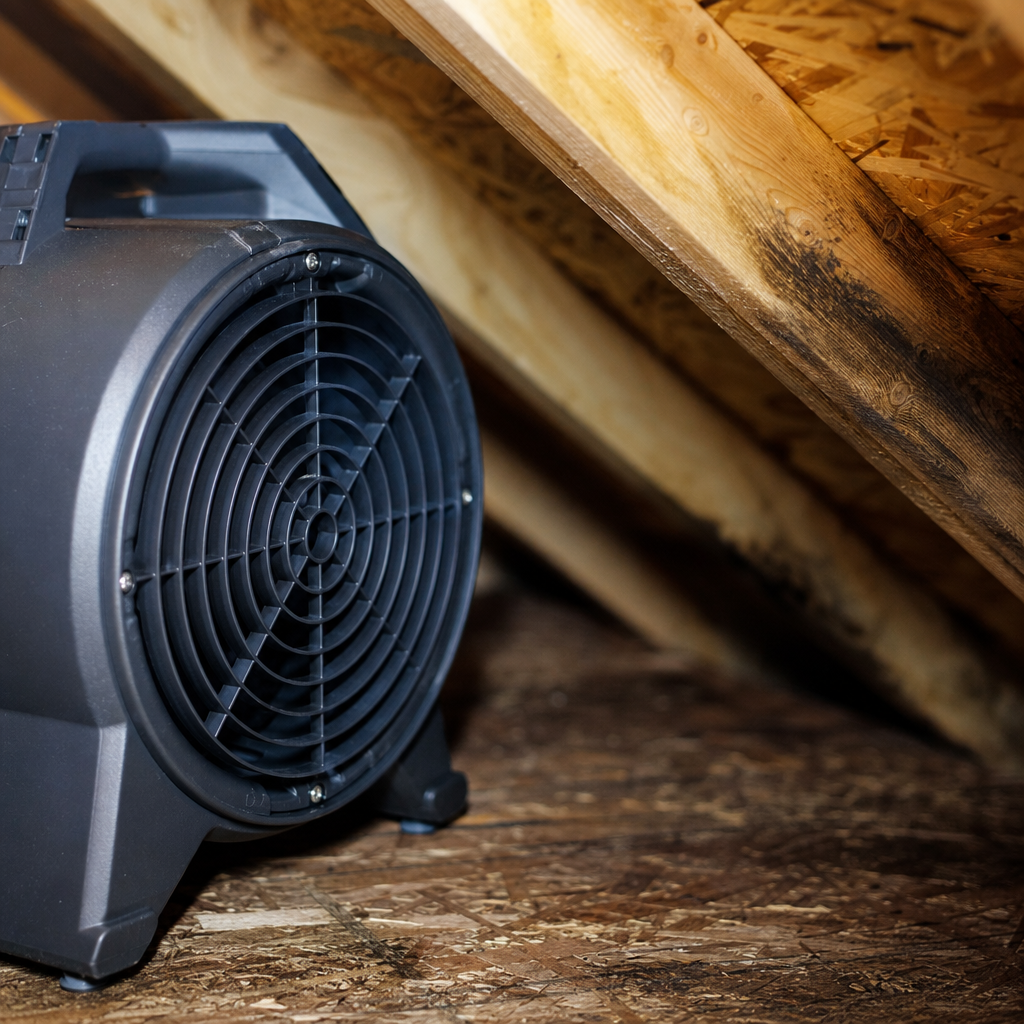
Because every storm creates a unique footprint, restoration costs in Austin vary widely based on property size, the extent of structural damage, water contamination category, and required drying equipment. A localized attic water cleanup and insulation patch may cost a few thousand dollars, whereas extensive structural drying, mold remediation, and complete thermal envelope reinstallation across a large multi-story home can run significantly higher.
Key Cost Drivers
- Scope of moisture migration: Saturation limited to attic joists costs less to dry than water that has traveled down wall cavities to the first floor.
- Material replacement: Blown-in cellulose that has packed down from water must be vacuumed out and replaced, whereas closed-cell spray foam may only require surface sanitization.
- Equipment requirements: High-capacity commercial desiccant dehumidifiers, air scrubbers, and negative air machines run continuously for several days to achieve target dry standards.
- Sanitization and mold remediation: Applying antimicrobial agents to roof trusses and ceiling framing prevents persistent odors and structural rot.
According to the City of Austin Hazard Mitigation Action Plan, historical records show 72 major thunderstorm-wind events over a 27-year tracking period, resulting in an estimated average annual loss of $2,576,149. Over that same 27-year span, the city documented 115 hail events, producing an estimated average annual property and crop loss of $5,101,188. Future wind and hail events remain categorized as highly likely, making proactive damage repair essential for long-term home value.[2]
Filing Insurance Claims for Storm-Damaged Attics
Standard Texas homeowners insurance policies generally cover sudden and accidental water damage resulting from storm perils like wind-driven rain tearing off shingles or hail puncturing a roof vent. However, rising floodwaters from ground level require a separate flood insurance policy through the NFIP or a private carrier. When filing a claim:
- Document all damage immediately with date-stamped photographs and video before cleanup begins.
- Request detailed moisture-meter logs and drying psychrometric charts from your restoration contractor.
- Keep itemized records of all damaged building materials and emergency mitigation work performed.
How to Identify Hidden Water and Insulation Damage
Need storm damage restoration in Austin?
We’re available now — call for a fast, free estimate.
Do not wait for water stains to show up on your living room ceiling. Look for these early warning signs in your attic after high winds or hail roll through Central Texas:
- Compressed or clumping insulation: Loose-fill insulation that appears flat, discolored, or crusty has been saturated with water and lost its thermal performance.
- Musty odors: Damp smells circulating through HVAC vents usually point to standing moisture or mold colonies inside the attic cavity.
- Rusted fasteners and nails: Black staining or rust around roof decking nails indicates lingering humidity and water entry around penetrations.
- Sudden energy bill spikes: If your air conditioning system is running non-stop right after a storm, ruined attic insulation is likely letting outside heat radiate straight into your living space.
Inspection and Safe Removal Steps
According to Super Green Insulation Austin, handling wet insulation requires proper safety gear and containment protocols to keep contaminants from spreading through your living areas:
- Moisture mapping: Technicians use non-invasive moisture meters and thermal cameras to identify the exact boundaries of wet materials behind walls and above ceilings.
- Controlled extraction: Wet, contaminated insulation is removed using industrial vacuum hoses routed directly to an outside waste collection system, avoiding dust spread inside the home.
- Framing treatment: Roof rafters, joists, and decking are treated with antimicrobial wash and thoroughly dried using directed airflow.
- Code-compliant replacement: Fresh insulation is installed to meet or exceed Austin energy code standards, restoring indoor comfort and protecting the roof deck year-round.
Frequently Asked Questions
Does homeowners insurance cover storm-damaged attic insulation?
Yes, in most cases where wind or hail creates an opening that allows rain to enter the attic, insurance policies cover the removal and replacement of the ruined insulation. Flood damage caused by rising surface water requires a dedicated flood policy.
Can wet attic insulation be dried out and reused?
Fiberglass batts that experienced clean rainwater intrusion can occasionally be dried if addressed within 24 hours, but loose-fill cellulose permanently mats down, loses its R-value, and cakes together once wet. In most storm scenarios, contractors like Super Green Insulation Austin explain that replacement is the safest, most cost-effective solution to avoid mold and high utility bills.
How fast does mold grow after an Austin roof leak?
In Austin’s warm climate, mold spores can begin colonizing damp insulation and wooden roof decking in as little as 24 to 48 hours following water intrusion. Immediate structural drying is essential to stop growth before it impacts indoor air quality.
What severe weather risks impact Austin homes most often?
Strong straight-line thunderstorm winds, large hail, and sudden flash floods cause the majority of local structural damage. A single severe local storm can knock out power to tens of thousands of residents, drop several inches of rain in less than an hour, and send water into vulnerable attic vents across the region.[5]
Need storm damage restoration in Austin?
We’re available now — call for a fast, free estimate.
Sources
- Texas Disaster #TX-00468 – federalregister.gov (2024)
- TORNADOES & FEMA – services.austintexas.gov (2023)
- Austin Climate Summary – National Weather Service – weather.gov (2017)
- [PDF] Flood Awarness for City of Austin Residents – National Fire Academy – apps.usfa.fema.gov (2019)
- Flash Flooding, Hail Impact Central Austin | AustinTexas.gov – austintexas.gov
Frequently Asked Questions
How long does the complete attic storm damage restoration process typically take?
Structural drying and water extraction typically take 24 to 72 hours using commercial dehumidifiers and air movers. Once framing timbers pass moisture testing and antimicrobial sanitization, Super Green Insulation Austin can usually complete new insulation installation in a single day.
How is indoor air quality protected while removing contaminated storm-damaged insulation?
Restoration teams seal attic access points and deploy negative air machines equipped with HEPA filtration to prevent dust and spore migration. Technicians then vacuum wet, soiled insulation through sealed hoses directly into exterior collection trucks to keep living areas clean.
What documentation will I receive to help substantiate my storm damage insurance claim?
Super Green Insulation Austin provides comprehensive moisture mapping reports, thermal imaging scans, and daily drying logs that detail water migration. These itemized records and date-stamped photos give adjusters the exact proof needed to process coverage for insulation removal, sanitization, and structural repairs.
About the author
 |
Sarah Jenkins Sarah Jenkins is an insulation specialist with over 8 years of experience in residential and commercial energy efficiency. Holding a Bachelor of Science in Environmental Science from Texas A&M University, she focuses on practical solutions for climate control in Central Texas. Her expertise lies in rapid-response attic and crawl space restoration, helping Austin property owners reduce utility costs and improve indoor comfort. |