
Quick Summary
Rapid water removal within 24 to 48 hours is critical to prevent invasive mold growth, structural wood rot, and secondary humidity damage after a leak or flood. Effective moisture extraction requires industrial dehumidifiers, specialized extraction units, and the immediate replacement of saturated materials by remediation specialists like Super Green Insulation Austin. Homeowners will learn the essential steps for drying vulnerable crawl spaces and attics and can contact Super Green Insulation Austin for 24/7 emergency service or a free moisture removal estimate.
Water Removal: How Do You Extract Moisture to Stop Mold Fast?
When a pipe bursts, a roof leaks, or flooding hits your home, professional water removal is the first line of defense. Simply mopping the floor will not protect your property from hidden damage. Water quickly migrates into subfloors and baseboards. To help reduce the likelihood of mold growth and protect your building structure, wet materials should generally be dried within 24 to 48 hours. Quick, thorough extraction halts moisture before it ruins materials, warps wood framing, and drives up repair bills.
Quick Answer: The Steps to Fast Moisture Extraction
Professional water removal extracts standing water and thoroughly dries building materials. The goal is simple: remove bulk water immediately and bring ambient humidity down fast enough to reduce the likelihood of mold spores colonizing organic materials like drywall and framing lumber. Thorough drying requires water-extraction equipment, fans, and dehumidifiers.
How Quickly Does Water Need to Be Removed to Prevent Mold?
Mold spores exist naturally in indoor and outdoor air, remaining harmless until they find moisture and an organic food source. Wet materials should generally be dried within 24 to 48 hours to reduce mold risk, although the EPA describes this 24-to-48-hour timeframe as a guideline rather than a guarantee.
Rapid water extraction cuts off the moisture supply before fungal colonies take root in building materials. Drying the area within that 24-to-48-hour window helps reduce the likelihood of mold growth.[1]
Secondary Moisture Damage Risks
Water damage rarely stays where it started. As water evaporates from a wet floor, it raises relative humidity throughout the home. This secondary moisture condenses on cooler surfaces, leading to peeling paint, warped door frames, rusted metal fasteners, and mold in areas that never directly touched the original leak. Crawl spaces and attics are especially vulnerable because poor airflow traps damp air.[4]
Should Wet Insulation Be Removed After Water Damage?
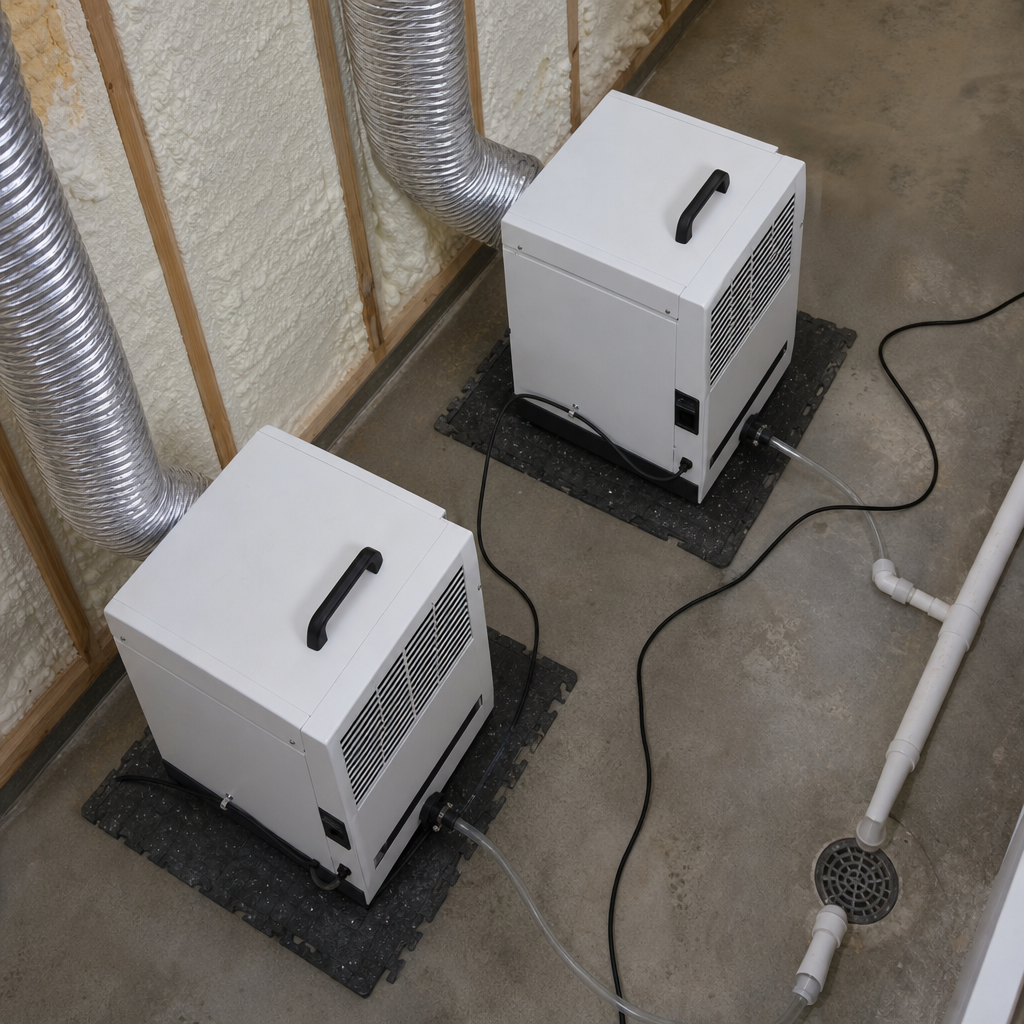
In most water damage scenarios, wet insulation must be removed and replaced, as saturated fibrous materials trap moisture against structural framing.
How Do Professionals Extract Standing Water From Basements and Crawl Spaces?
Basements, crawl spaces, and attics present unique extraction challenges due to tight access and poor ventilation. When dealing with contaminated or sewage water, appropriate safety precautions and protective equipment must be used. Professional drying follows standard methods:[5]
- Water Extraction: Standing water is removed using water-extraction units or wet vacuums.
- Drying and Dehumidification: Fans and dehumidifiers are positioned to dry structural materials and remove moisture from the air.
What Is the Difference Between Water Extraction and Water Mitigation?
While people often use the terms interchangeably, water extraction and water mitigation describe different aspects of the recovery process.
- Water Extraction is the physical removal of standing surface water using water-extraction equipment or wet vacuums. It is an immediate action designed to remove bulk liquid.
- Water Mitigation refers to the broader drying and damage-control process designed to prevent further structural damage and reduce the likelihood of mold growth.
Frequently Asked Questions About Water Removal
How much does professional water removal cost?
Professional water removal costs vary depending on the amount and category of water, the affected materials, accessibility, drying requirements, and geographic location. It is recommended to obtain a written estimate for your specific situation.
Does homeowners insurance cover emergency water removal?
Coverage depends on the cause of the damage and your specific policy terms. Sudden and accidental damage from plumbing or roof leaks is typically covered, while flooding from groundwater, surface runoff, or snowmelt is generally excluded and usually requires separate flood insurance.[3]
Can I dry out a flooded crawl space with standard household fans?
Household fans move air across surfaces, but they do not extract water or lower overall indoor humidity. Complete drying requires water-extraction equipment, fans, and dehumidifiers to remove moisture from the space.[2]
Sources
- For farm, home, and energy – Water availability in the U.S. – water.usgs.gov (2025)
- From sea to shining sea – Water availability in the U.S. – USGS – water.usgs.gov (2025)
- The National Integrated Water Availability Assessment, Water … – pubs.usgs.gov (2025)
- How We Use Water – usgs.gov (2025)
- Irrigation Water Use | U.S. Geological Survey – USGS.gov – usgs.gov (2020)
Related reading: Storm Damage Restoration in Austin | Call Now-10% Off | Same-Day Service | Free Estimate
Related reading: Storm Damage Restoration – Call Now-10% Off – Same-Day Service – Free Estimate
Frequently Asked Questions
Why must wet insulation be completely removed after water damage instead of dried out?
Wet fibrous insulation permanently loses its R-value, compresses, and traps moisture against structural framing, accelerating hidden mold growth and wood rot. Super Green Insulation Austin provides professional wet insulation extraction and sanitization to prepare your attic or crawl space for clean, energy-efficient replacement.
What should I do immediately before professional water removal technicians arrive?
Shut off the main water supply to stop active leaks and turn off electricity to flooded areas if it is safe to do so. Avoid walking through deep standing water, and call Super Green Insulation Austin for 24/7 emergency water removal to begin extraction within the critical 24-to-48-hour window.
How can I prevent moisture and mold from returning to my crawl space after extraction?
Stopping mold long-term requires thorough antimicrobial sanitization, deep structural drying, and the installation of a high-performance moisture barrier. Super Green Insulation Austin offers comprehensive crawl space moisture barrier protection and free on-site estimates to keep your foundation dry permanently.
About the author
 |
David Wallace David Wallace is an insulation specialist with over 15 years of experience in residential and commercial energy efficiency. He holds a Bachelor of Science in Construction Management from the University of Texas at Austin and is a certified Building Performance Institute (BPI) professional. David is passionate about helping property owners optimize their insulation for comfort and long-term cost savings. |