
Top Signs You Need Insulation Service — Don’t Ignore These
It’s easy to forget about what’s hidden away in your attic or walls, but your home’s insulation is working hard year-round to keep you comfortable and your energy bills low. Many homeowners in Austin mistakenly believe their insulation is fine until a problem becomes undeniable, often leading to higher costs and discomfort. Ignoring subtle cues your home is sending can cost you significantly in the long run, especially with Austin’s unique climate. We’ve seen firsthand how a few simple checks can prevent major energy waste and keep your home a sanctuary, regardless of the Texas heat or occasional chill.
Uneven Temperatures & Drafty Rooms in Your Austin Home
One of the most common and frustrating signs that your insulation isn’t performing its best is inconsistent temperatures throughout your house, particularly here in Austin. You might notice that certain rooms feel noticeably warmer than others during the summer, or colder in the winter, even with your HVAC system running. This often points to areas where insulation has settled, is missing, or has become compressed. In neighborhoods like Tarrytown, we frequently see older homes where insulation may have degraded over decades, leading to significant temperature variances between the upstairs and downstairs, or even between adjacent rooms. Drafty windows and doors, especially those along exterior walls, are another strong indicator. You might feel a persistent cool breeze even when your windows are closed tight. This isn’t just uncomfortable; it means conditioned air is escaping your home, and outside air is seeping in, forcing your HVAC system to work overtime. For instance, in the Zilker neighborhood, where homes often feature large windows, drafts can be a significant source of energy loss if the surrounding wall and attic insulation isn’t adequate to buffer against temperature fluctuations.
Skyrocketing Energy Bills
Your energy bill is a direct reflection of how efficiently your home is using power. If you’ve noticed a sudden or gradual increase in your electricity or gas bills, especially without a corresponding change in your usage habits, it’s a strong signal that your insulation might be failing. In Austin, where summer heat demands constant air conditioning, inefficient insulation can dramatically inflate your cooling costs. We’ve seen homeowners in areas like Westlake Hills experience substantial jumps in their summer energy expenses simply because their attic insulation had become insufficient over time. The same holds true for the cooler months; inadequate insulation means your heating system works harder to maintain a comfortable temperature, leading to higher heating bills. Think of your insulation as the barrier that keeps your expensive conditioned air inside. When that barrier is weak, that energy literally goes out the window – or more accurately, through the walls and ceiling. This wasted energy translates directly into higher costs, making it one of the most compelling reasons to consider an insulation assessment for your Austin residence.
Signs of Moisture and Mold Growth
Moisture is the enemy of a healthy home, and inadequate insulation can contribute significantly to its presence. In a humid climate like Austin’s, condensation can form on cool surfaces within your walls and attic when warm, moist air from inside your home comes into contact with poorly insulated areas. This persistent moisture creates the perfect breeding ground for mold and mildew. You might start noticing musty odors, especially in less-ventilated areas like attics, crawl spaces, or even within closets. Visible signs of mold growth, often appearing as dark, fuzzy spots, are a serious health concern and a clear indication that your insulation is not performing its job of maintaining consistent indoor temperatures and preventing condensation. In older areas of Austin, such as Hyde Park, where attics might not have had modern vapor barriers installed, moisture issues can be more prevalent. We’ve also seen instances where leaky roofs or plumbing issues are exacerbated by poor insulation, trapping moisture and accelerating damage. Addressing insulation deficiencies can help prevent these insidious problems before they become costly structural repairs and affect your family’s health.
Pests and Rodents Finding Their Way In
Your home’s insulation isn’t just a barrier against temperature; it’s also a crucial part of keeping unwanted guests out. When insulation becomes old, compressed, or damaged, it can create gaps and voids that pests and rodents can easily exploit. In Austin, we often see squirrels, mice, and even larger critters looking for warm, sheltered places to nest, especially as the weather changes. They can chew through damaged insulation, making it even less effective and creating pathways for other pests. In neighborhoods like South Austin, where older homes are common, we’ve found that compromised attic insulation provides an easy entry point for various creatures. Not only is the presence of pests uncomfortable and unhygienic, but their nesting and chewing can also cause further damage to your home’s structure and electrical wiring, posing a fire hazard. If you’re hearing scratching noises in your walls or attic, or noticing droppings, your insulation might be compromised and offering an open invitation to these unwelcome visitors.
Your Roof or HVAC System Seems to Be Working Overtime
Your insulation plays a critical role in supporting the efficiency of your entire home’s climate control system. If you notice your air conditioner or furnace seems to be running constantly, cycling on and off more frequently than usual, or struggling to reach your desired temperature, your insulation is a prime suspect. In the intense Austin heat, an overworked air conditioner is a common symptom of poor attic insulation. The heat seeps through the inadequate barrier, making the AC unit work harder to cool the air inside. Similarly, during colder months, a furnace will have to run for longer periods to compensate for heat loss through poorly insulated walls and attics. We’ve observed in communities like Georgetown, just north of Austin, that when attics lack sufficient R-value (the measure of thermal resistance), HVAC systems are under immense strain. This constant running not only leads to higher energy bills but also significantly shortens the lifespan of your expensive HVAC equipment. It’s a domino effect: bad insulation leads to system strain, which leads to premature wear and costly repairs, all because the initial barrier wasn’t strong enough.
The Bottom Line
Your home’s insulation is a silent guardian of your comfort and your budget. Paying attention to these signs – uneven temperatures, rising energy bills, moisture issues, pest intrusion, and overworked HVAC systems – can help you proactively address insulation problems before they become major headaches. If you’re in Austin and suspect your home’s insulation needs attention, Super Green Insulation Austin offers free estimates to assess your needs and provide the best solutions. Our team, led by Tom Hopkins, has been serving the Austin area for over 16 years, and we’re committed to helping you achieve a more comfortable and energy-efficient home. Call us today at (866) 434-2901 for your free estimate.
Frequently Asked Questions
In Austin, we commonly see several types of insulation, each with its own benefits. Fiberglass batts and rolls, often made by brands like Owens Corning or Johns Manville, are a traditional and cost-effective option. Blown-in cellulose, frequently from GreenFiber, is excellent for filling existing cavities and attics. Spray foam insulation, like Icynene or Demilec, offers superior air sealing and R-value per inch, making it ideal for attics, walls, and crawl spaces, especially in our challenging climate. For specific needs like soundproofing or fire resistance, Rockwool or Knauf mineral wool can also be excellent choices.
While insulation doesn’t have a strict “expiration date,” it’s wise to have it inspected every 10-15 years, or sooner if you notice signs of degradation. Factors like settling, moisture damage, pest intrusion, or renovations can all impact its effectiveness. In Austin, the extreme temperature fluctuations and humidity can also accelerate wear. If your home is older than 20 years and you’ve never had the insulation assessed, it’s a good time to get a professional opinion to ensure it’s still meeting modern energy efficiency standards.
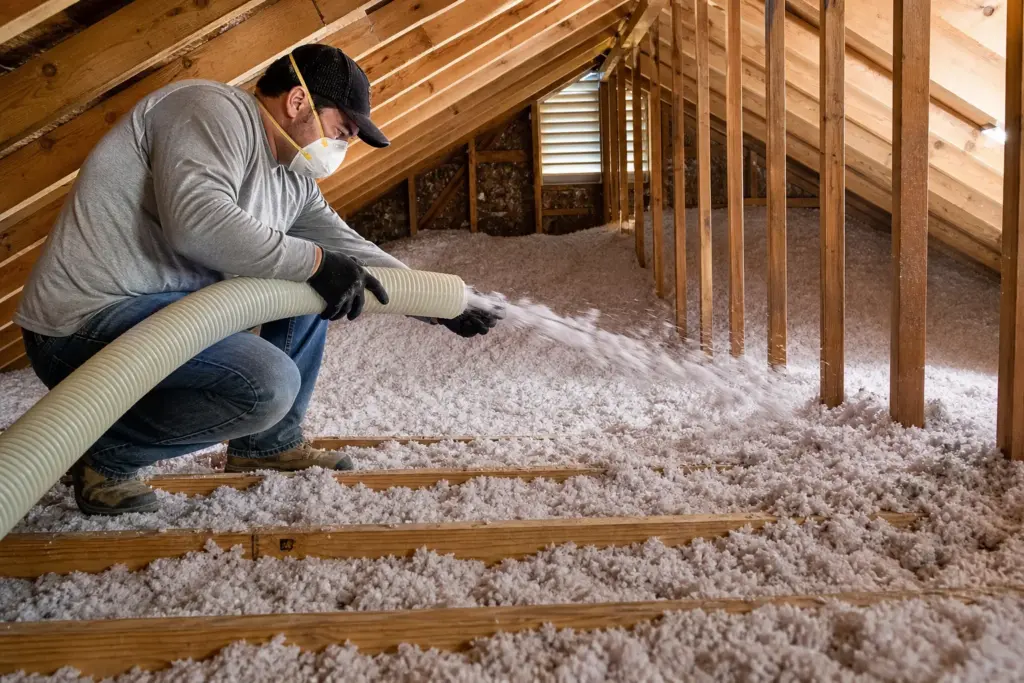
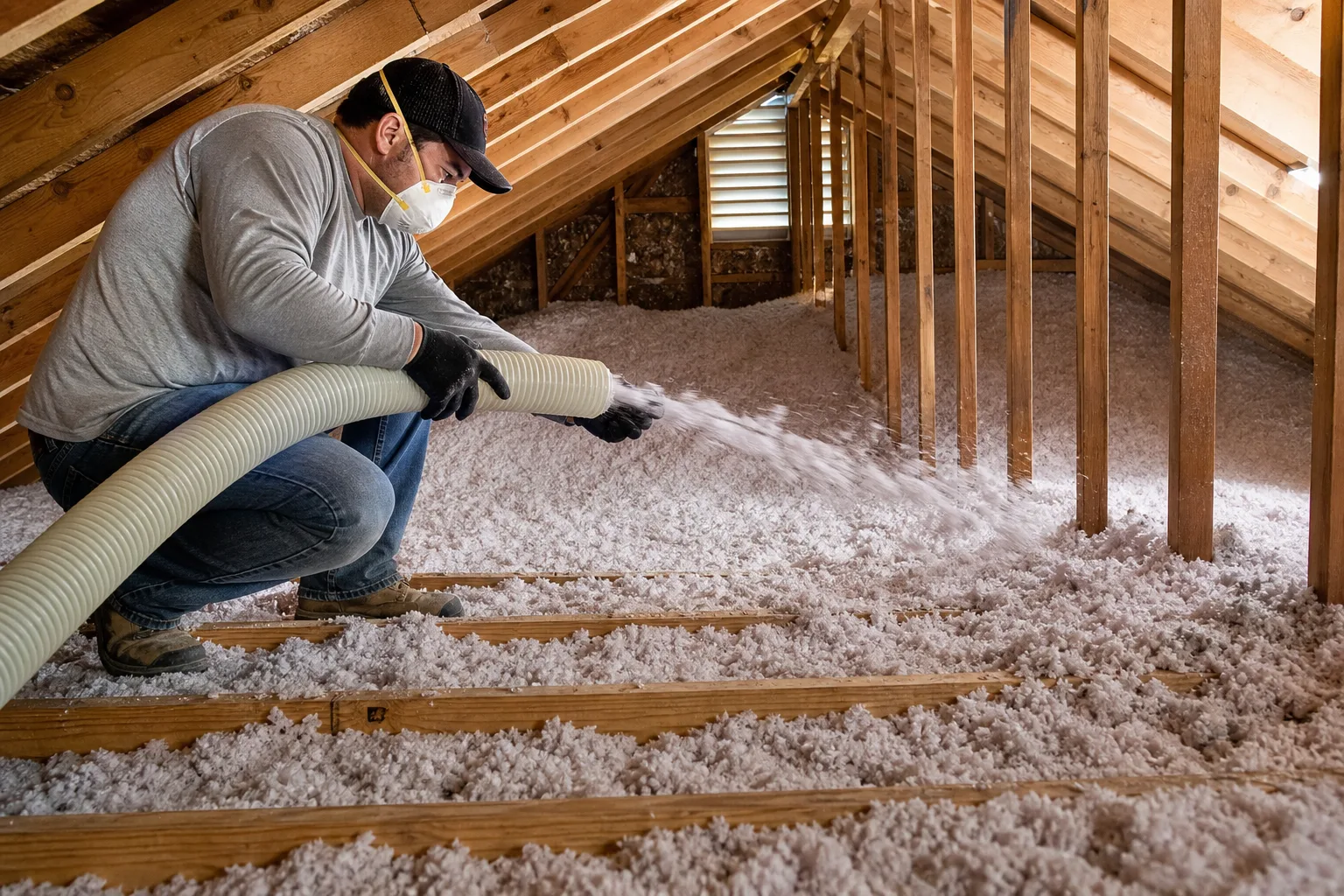
While DIY insulation projects are possible, especially for simple batt installations, we strongly recommend hiring a professional for attic insulation in Austin. The attic environment can be hazardous, with tight spaces, heat, and potential for fall risks. Professionals have the right equipment for blown-in or spray foam applications, ensuring complete coverage and proper R-value. They also understand local building codes and how to properly ventilate attics to prevent moisture issues, which is crucial in Texas’s climate. Mistakes can lead to reduced efficiency and costly repairs, so professional installation by experts like our team at Super Green Insulation Austin is often the safest and most effective route.
R-value is a measure of an insulation material’s resistance to heat flow. The higher the R-value, the better the insulation performs. For Austin’s climate, recommendations vary by location within the home, but generally, attics require the highest R-values due to direct sun exposure and heat buildup. The Department of Energy often recommends an R-value between R-38 and R-60 for attics in our region. Walls typically require R-13 to R-21, and floors might need R-25 to R-30. Using insulation from reputable brands like CertainTeed or Johns Manville, installed to the correct depth, is key to achieving these R-values and maximizing your home’s energy efficiency.
Written by the team at Super Green Insulation Austin, serving Austin since 2010.
Need Insulation Help?
Call Super Green Insulation Austin — licensed & insured, here with fast after-hours help in Austin.
(866) 434-2901