
Quick Summary
Determining the true attic insulation cost requires looking beyond base rates of $1 to $3 per square foot to account for essential prep work like air sealing and old material removal. Super Green Insulation Austin acts as the transparent local authority for Central Texas homeowners by providing upfront, no-obligation estimates that demystify project variables and highlight long-term energy savings. Homeowners can avoid hidden fees and secure federal tax credits by calling or requesting a free estimate online from Super Green Insulation Austin for a transparent, climate-specific quote.
Attic Insulation Cost: How to Budget Smart and Avoid Hidden Fees
If you are trying to pin down attic insulation cost, the tricky part is not the headline number. It is figuring out what is actually included in the quote. In 2025, the average attic insulation installation cost is about $2,100, with most projects landing between $1,700 and $2,500, or roughly $1 to $3 per square foot. In Austin, the final price can move fast once labor, access, old insulation removal, air sealing, and moisture issues come into play.[5]
That is where many homeowners get caught off guard. Some contractors start with a low estimate, then add charges later for items that should have been part of the job from the start. At Super Green Insulation Austin, we keep pricing upfront and transparent, with free no-obligation estimates and licensed, bonded, and insured technicians backed by over 16 years of local experience. As a certified energy auditor and home performance specialist, I have learned that the smartest budget starts with the full scope, not guesswork.
In this guide, I will walk you through how to compare options, spot hidden fees, and get a quote you can trust. If you are ready, call or request a free estimate online for a transparent attic insulation quote.
What You Need to Know About Attic Insulation Cost Before You Call Anyone
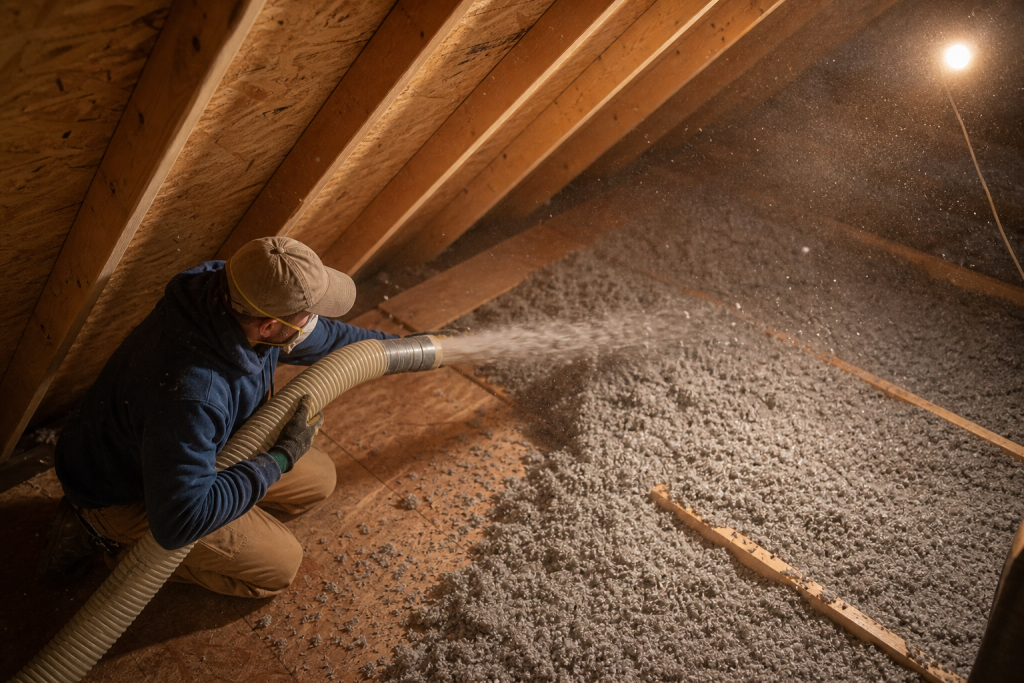
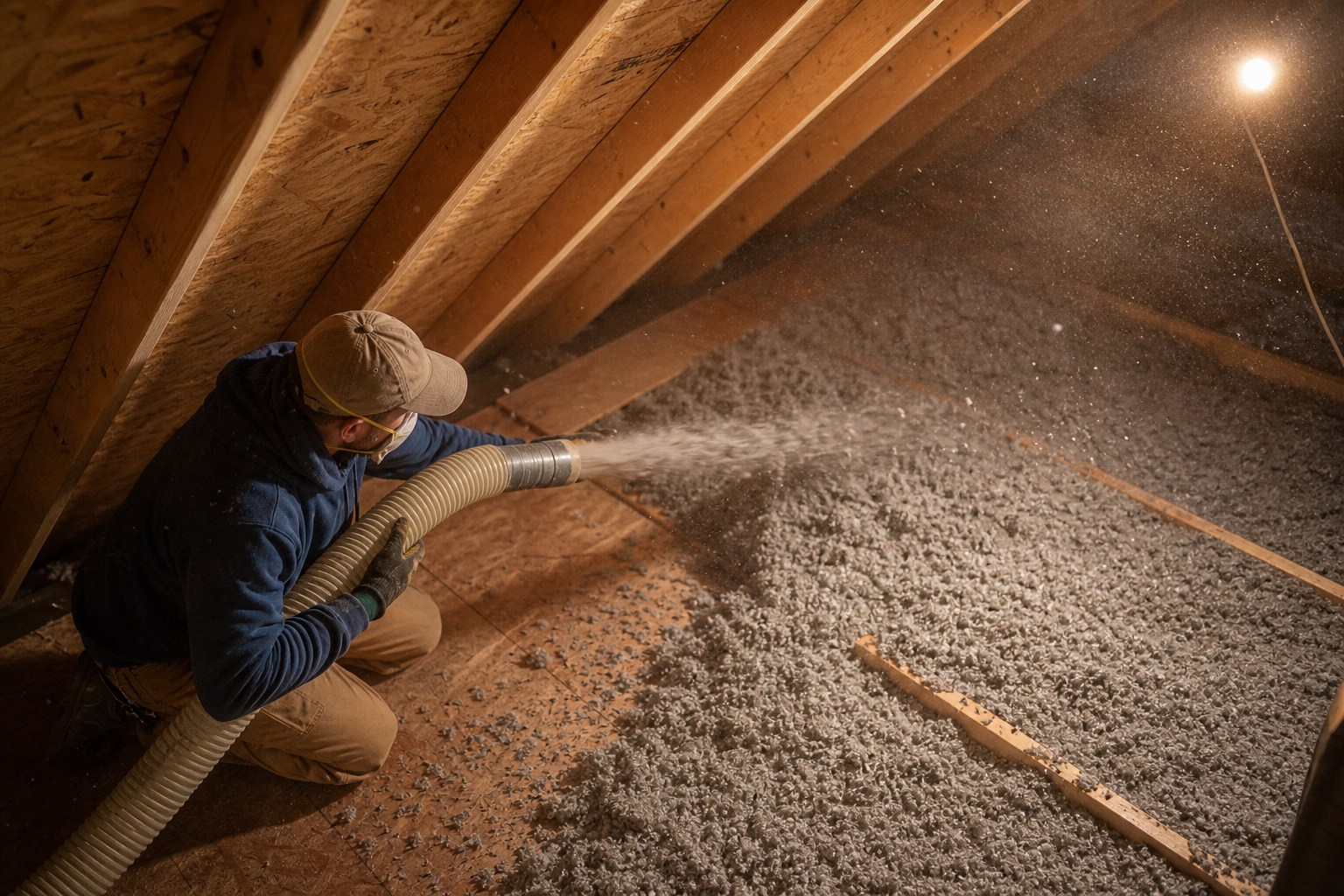
What You Need to Know About Attic Insulation Cost Before You Call Anyone in brief: Attic insulation costs $1 to $3 per square foot on average, so an 1,800 sq ft attic runs roughly $1,800 to $5,400 for materials and labor. In Austin, the total project price often rises once you account for old insulation removal, air sealing, radiant barrier installation, and any pest or moisture remediation needed before new material goes in.
Before searching for attic insulation installers near me, it helps to know that base rates are only a starting point. According to HomeAdvisor, the average installation price is $2,100 in 2025, but pricing changes based on material type, attic size, and whether old insulation removal is required.
According to Leyton, fiberglass is the lowest-cost common attic insulation material at $0.40 to $0.70 per square foot in 2025. Even so, an 1,800-square-foot project may cost about $1,800 to $5,400, according to Angi in 2025. In our climate, skipping air sealing can wipe out much of the expected savings. Super Green Insulation Austin provides free, no-obligation estimates for any Austin attic insulation project so you can see the full cost upfront. We price each Austin insulation upgrade clearly, without hidden fees, so homeowners know what they are paying for.
What You Will Need Before Getting an Attic Insulation Estimate
Before calling attic insulation installers near me, gather your home’s square footage, recent energy bills, and notes on problem areas like hot rooms. Having this information ready helps make sure your quote reflects the real scope of work, not just a basic materials estimate.
According to Angi, professional attic insulation installation costs $1,700 to $2,500, with labor averaging $1.50 to $3 per square foot in 2026. To get an accurate Austin attic insulation quote that matches your actual needs, complete these steps before your inspection:[2]
- Measure your footprint: Know your square footage. A typical 1,800-square-foot attic may cost about $1,800 to $5,400, according to Angi.
- Locate access points: Note your hatch location. Some attic insulation Austin projects require extra setup to reach tight corners.
- Spot-check hazards: Safely look for visible mold, rodent droppings, or damaged ductwork before the technician arrives so you can discuss the scope honestly.
- Gather bills: Pull recent energy statements for a baseline performance comparison.
Super Green Insulation Austin includes a full inspection with every free estimate. Preparing this checklist helps us evaluate your true attic insulation cost upfront, which can help avoid the hidden surcharges that show up in many other quotes.
Step 1: Understand What Drives Attic Insulation Cost Per Square Foot
Step 1: Understand What Drives Attic Insulation Cost Per Square Foot in brief: Attic insulation costs $0.40 to $0.72 per square foot for fiberglass batts (material only), $1.50 to $2.50 per square foot installed for blown-in insulation, and $2.50 to $4.50 or more per square foot for closed-cell spray foam. The final price per square foot also depends on the target R-value, attic accessibility, and labor complexity in your specific home.
Most homeowners pay between $1 and $3 per square foot installed, but the range changes based on material choice, required R-value, and how easy or difficult your attic is to work in. According to USA Insulation citing the National Insulation Association, an uninsulated roof can account for approximately 25% of energy use, which is why this part of the home deserves careful budgeting.
Material Type and R-Value Targets
According to Gordian, the national average insulation price is $0.67 per square foot, and fiberglass insulation cost is $0.72 per square foot as of October 1, 2025. However, Austin attic insulation must hit R-38 to R-60 to handle our climate. Higher R-values require thicker material layers, which increases your total attic insulation cost.[3]
| Insulation Material | Estimated Cost Per Square Foot |
|---|---|
| Fiberglass Batts (Material Only) | $0.40 – $0.72 |
| Blown-In Fiberglass or Cellulose (Installed) | $1.50 – $2.50 |
| Open-Cell Spray Foam (Installed) | $1.50 – $2.50 |
| Closed-Cell Spray Foam (Installed) | $2.50 – $4.50+ |
Labor Complexity and Attic Accessibility
When attic insulation installers near me arrive, Angi’s standard 1,800 square foot estimate shifts based on physical hurdles. Crews assess labor complexity in stages:
- Measuring pitch: Steep roofs force restrictive crawling and slower movement.
- Assessing access: Small hatches slow down material entry and staging.
- Navigating HVAC: Floor obstructions require careful maneuvering to ensure even coverage.
- Identifying hazards: Knob-and-tube wiring demands specialized, time-intensive handling.
Properly installing your Austin insulation can produce measurable returns. One Bogleheads forum user reported 10% ongoing power bill savings, expecting the financial benefit to double the initial project cost over 10 years.
Step 2: Compare Blown-In Insulation Cost vs. Spray Foam Cost
Step 2: Compare Blown-In Insulation Cost vs. Spray Foam Cost in brief: Yes, blown-in insulation is cheaper than spray foam in nearly every scenario. Blown-in cellulose or fiberglass typically costs $1.50 to $3.00 per square foot installed, while closed-cell spray foam runs $2.50 to $4.50 or more. However, spray foam also acts as an air and moisture barrier, which can reduce long-term energy costs and help prevent humidity problems common in Austin attics.
Is blown-in insulation cheaper than spray foam? Yes, almost always. Blown-in cellulose or fiberglass costs roughly 40 to 60 percent less per square foot than spray foam. Even though fiberglass insulation costs increased 18.49% year over year since Q2 2025, according to Gordian’s insulation cost update, it remains a cost-effective option for many homeowners.[4]
Your choice depends on performance tradeoffs. Blown-in is quick and affordable, but it does not stop airflow. Spray foam costs more upfront but also works as a moisture barrier, which matters for Austin insulation challenges. If your home has major air leaks, ongoing moisture, or ductwork in unconditioned space, spray foam can offer better long-term ROI for Austin attic insulation projects. For basic top-ups on a properly sealed attic, blown-in is often the better budget choice before searching for attic insulation installers near me.
| Feature | Blown-In Fiberglass | Blown-In Cellulose | Open-Cell Spray Foam | Closed-Cell Spray Foam |
|---|---|---|---|---|
| Cost Per Sq Ft | $1.50 – $2.50 | $1.50 – $3.00 | $1.50 – $3.50 | $2.50 – $4.50+ |
| R-Value Per Inch | 2.2 – 2.7 | 3.2 – 3.8 | 3.5 – 3.8 | 6.0 – 7.0 |
| Air Sealing | ✗ | ✗ | ✓ | ✓ |
| Moisture Resistance | Poor | Moderate | Poor | Excellent |
| Best Use Case | Budget top-ups | Budget top-ups | Air sealing | High humidity |
Step 3: Calculate the Real Cost for Your Attic Size
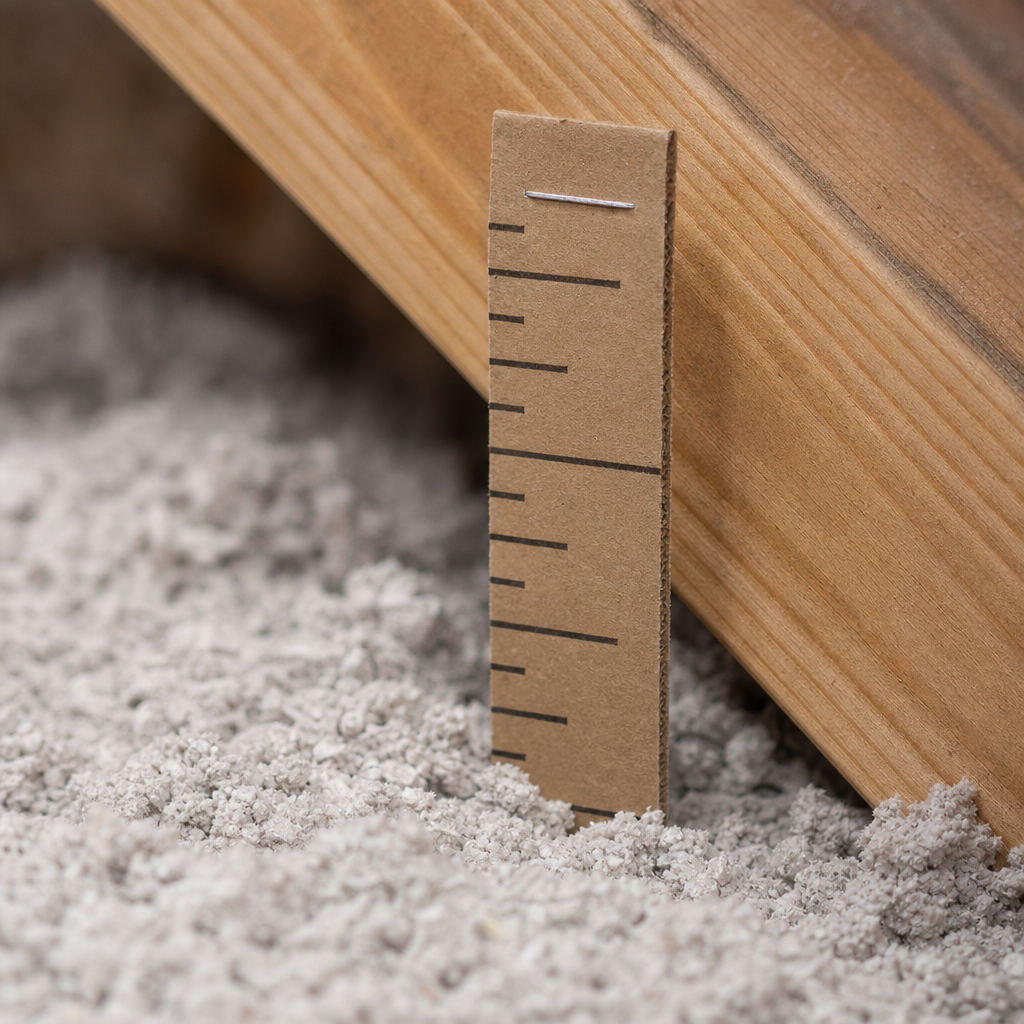
Step 3: Calculate the Real Cost for Your Attic Size in brief: A 1,500 sq ft attic insulated with blown-in material typically costs $2,250 to $4,500. Spray foam for the same attic ranges from $3,750 to $6,750 or more. These figures cover materials and standard labor but do not include old insulation removal, air sealing, or remediation work, which can add 20 to 40 percent to the total project price.
For a 1,500 sq ft space, blown-in insulation averages $2,250 to $4,500, while spray foam runs $3,750 to $6,750. A 1,000 sq ft attic costs $1,500 to $3,000 for blown-in materials.
Example budgets for 1,000 and 1,500 sq ft attics
| Attic Size | Blown-In Cost | Spray Foam Cost |
|---|---|---|
| 1,000 sq ft | $1,500 – $3,000 | $2,500 – $4,500 |
| 1,500 sq ft | $2,250 – $4,500 | $3,750 – $6,750 |
According to Gordian, insulation costs were up 19.14% year over year, sitting at $0.64 per square foot in 2025. Louisiana contractor data shows 1,500 to 2,000 sq ft projects regularly exceed base estimates. Before hiring attic insulation installers near me, remember these are starting figures. Proper Austin attic insulation requires prep work. The hidden cost stack can add 20 to 40 percent to your attic insulation Austin bill, which affects every Austin insulation upgrade.[1]
Step 4: Account for Austin’s Hidden Cost Stack That Most Quotes Leave Out
The real cost of Austin attic insulation goes beyond square footage alone. Many estimates leave out important prep work like removal, air sealing, radiant barriers, and remediation. If you ignore this hidden cost stack, the cheapest quote can turn into expensive surprises and weaker savings later.
For any project involving attic insulation Austin homes require site-specific preparation. Tom Hopkins, owner of Super Green Insulation Austin, explains why a careful assessment protects the homeowner: “We provide upfront, transparent pricing because homeowners deserve to know the full scope. When contractors skip air sealing or ignore moisture damage just to look cheaper, the homeowner pays for it in hidden surcharges.”
To avoid vague estimates, make sure your quote includes these four important steps:
- Old insulation removal and disposal: Degraded or contaminated materials must come out first, adding $1 to $2 per square foot to your total attic insulation cost.
- Air sealing before insulation: Sealing gaps around wiring and plumbing is necessary. According to ENERGY STAR, homeowners can save an average of 15% on heating and cooling costs or about 11% on total energy costs by air sealing and adding insulation in attics, floors over crawl spaces, and basements in 2025. This step typically adds $350 to $1,500.
- Radiant barrier installation for Texas heat: A radiant barrier on the roof deck can cut attic temperatures by 20 to 30 degrees, costing $0.15 to $0.75 per square foot.
- Pest contamination cleanup and moisture remediation: Sanitizing rodent damage and repairing moisture-compromised decking are prerequisites for lasting Austin insulation performance.
When searching for attic insulation installers near me, look for transparent, locally owned experts who include these factors in a free, no-obligation estimate instead of relying on high-pressure sales tactics.
Step 5: Estimate Your Energy Savings and Payback Period
Step 5: Estimate Your Energy Savings and Payback Period in brief: New attic insulation can reduce heating and cooling energy waste by 20 to 25 percent, according to the U.S. Department of Energy and the National Insulation Association. In dollar terms, homeowners commonly save $150 to $250 per year on energy bills. A typical payback period ranges from 8 to 12 years, though improved comfort and higher resale value add returns that are harder to quantify.
After factoring in the preparation costs discussed earlier, how much will new Austin insulation actually save you? Expect to recoup up to $250 annually, meaning a typical Austin attic insulation project pays for itself in eight to twelve years while improving indoor comfort right away.
According to the U.S. Department of Energy, under-insulated homes waste 20% of heating and cooling energy in 2023. The National Insulation Association estimates roof losses at 25% in 2023. A Green Building Advisor analysis pegged maximum savings at $250 yearly. Real-world results line up with that, one Bogleheads user reported 10% electricity savings and estimated a 10-year payback.
Before hiring attic insulation installers near me, calculate your specific timeline:
- Divide your total project cost by your estimated annual savings.
- A $3,000 project saving $250 yearly takes roughly 12 years to recoup.
- A $2,000 project drops the payback period closer to 8 years.
When upgrading attic insulation Austin homeowners should also consider the immediate removal of hot rooms, since comfort matters just as much as the long-term return.
Step 6: Check for Tax Credits and Austin-Area Rebates
Step 6: Check for Tax Credits and Austin-Area Rebates in brief: Yes. The federal 25C tax credit under the Inflation Reduction Act allows homeowners to claim up to $1,200 per year for qualifying insulation materials and air sealing. Austin Energy may also offer local rebates for energy-efficiency upgrades. Confirm current eligibility with your insulation contractor and verify that the materials meet IECC standards for your climate zone before work begins.
Yes, combining federal tax credits with local utility rebates can lower your Austin attic insulation cost. The 25C tax credit covers 30 percent of qualifying materials and air sealing, up to $1,200 annually.
According to the U.S. Department of Energy, insulation must meet IECC standards to qualify in 2024. As an energy auditor, I often see homeowners miss these savings by hiring unverified attic insulation installers near me who use non-compliant products.
To secure these savings before signing a contract:
- Verify Eligibility: Make sure your Austin insulation meets IECC climate zone standards.
- Check Local Rebates: Review Austin Energy for active weatherization programs, since funding changes annually.
- Consult Experts: During your free estimate, Super Green Insulation Austin can identify which materials qualify.
Including these incentives in your budget math shortens your payback period. Call or request a free estimate online today to get an upfront, honest quote for your attic insulation Austin project.
Step 7: Get an Honest Quote and Know What to Look For
Step 7: Get an Honest Quote and Know What to Look For in brief: You should remove old insulation before adding new material if it is contaminated by pests, mold, or moisture, or if it has compressed to the point of losing R-value. If existing insulation is clean and intact, layering new material on top is a cost-effective option. A qualified insulation contractor can assess the condition during an on-site inspection and recommend the right approach.
Red Flags in Insulation Estimates
When evaluating attic insulation installers near me, avoid vague quotes that do not include license documentation or contractors who pressure you to sign immediately. According to the U.S. Department of Energy, air sealing saves up to 20 percent on energy costs in 2023, yet budget contractors often leave it out to make their initial bid look lower.
What a Transparent Quote Includes
A trustworthy Austin insulation quote provides:
- Itemized Pricing: Clear separation of material and labor costs.
- Prep Work: Defined removal, pest remediation, and sealing scopes.
- Guarantees: Warranties, project timelines, and insurance proof.
Super Green Insulation Austin provides free, no-obligation estimates without hidden fees. With over 16 years of local experience and a 100 percent satisfaction guarantee, our licensed experts handle your Austin attic insulation properly. Request a transparent attic insulation Austin quote today.
Frequently Asked Questions About Attic Insulation Cost
Wrapping up your attic insulation cost research means getting clear answers. These baseline figures help protect you from vague quotes and make sure your Austin attic insulation project delivers real thermal protection.
-
How much is it per square foot?
$1 to $3 installed.
-
Blown-in vs. spray foam?
Blown-in is 40 to 60 percent cheaper.
-
1,500 sq ft average?
$2,250 to $4,500 for blown-in; $3,750+ for spray foam.
-
Energy savings?
According to the U.S. Department of Energy, expect up to 20 percent savings on heating and cooling in 2023.
-
Payback period?
Typically 8 to 12 years.
-
Remove old material?
Only if contaminated or compressed.
-
Tax credits?
Yes, up to $1,200 annually via federal credits, plus Austin Energy rebates.
Super Green Insulation Austin answers these during every free estimate. Skip the high-pressure tactics of competitors handling attic insulation Austin homes require. For upfront Austin insulation pricing, contact the most reliable attic insulation installers near me today.
Sources
- How to Shop for Home Insulation in 2025 – Consumer Reports – consumerreports.org (2025)
- 2026 Cost to Install Insulation Per Square Foot – homeadvisor.com (2026)
- How Much Does Insulation Installation Cost? [2026 Data] | Angi – angi.com (2026)
- What the Data Says: Insulation Cost Updates – gordian.com (2026)
- How Much Does Attic Insulation Cost in 2025? – HomeAdvisor – homeadvisor.com (2025)
Frequently Asked Questions
Why is a radiant barrier often recommended for Austin attics alongside standard insulation?
In the Central Texas heat, a radiant barrier reflects thermal radiation to lower attic temperatures by 20 to 30 degrees, preventing your AC from overworking. Super Green Insulation Austin includes this assessment in our free estimates to ensure your home remains comfortable during extreme summer peaks.
How long does a typical attic insulation project take to complete?
Most professional installations, including prep work like air sealing, are completed within a single day. Super Green Insulation Austin provides clear project timelines during your upfront quote so you can plan your schedule without unexpected delays.
Is it safe to leave old insulation in the attic when adding new material?
You can layer new material over old insulation if it is clean and dry, but contaminated or compressed material should be removed to prevent mold and pest issues. Our experts at Super Green Insulation Austin provide honest, no-obligation inspections to determine if a full removal is necessary for your specific attic.
About the author
 |
Marcus Donovan Marcus Donovan is a certified energy auditor and home performance specialist with over 12 years of experience in the Austin construction industry. He holds a Bachelor of Science in Construction Management from Texas State University and focuses on residential and commercial energy efficiency. His practical knowledge covers everything from attic insulation retrofits to complex moisture control systems. |
Get started
Call Now - Free EstimateNeed Insulation Help?
Call Super Green Insulation Austin — licensed & insured, here with fast after-hours help in Austin.
(866) 434-2901