
Quick Summary
Excess humidity in freezer units creates thick frost buildup and strains cooling coils, often driven by high ambient moisture in spaces like uninsulated garages rather than simple mechanical failure. Moisture control specialists like Super Green Insulation Austin emphasize that sealing structural air leaks and improving room insulation protects appliance seals from external vapor pressure and elevated indoor humidity. Readers will learn how to troubleshoot gasket seals, optimize internal airflow, and evaluate indoor moisture levels to determine if a comprehensive home insulation assessment is needed.
Humidity in Freezer: Stop Frost and Moisture Fast
Excess humidity in freezer units quickly turns into thick frost, icy packages, and frozen evaporator coils. While regular maintenance like replacing worn door gaskets and clearing clogged drain lines helps, recurring moisture is often more than a simple appliance defect. In many cases, it points to a problem with the surrounding room and your home’s thermal boundary.
When warm, moisture-heavy air slips into a sub-zero cabinet, condensation freezes almost instantly. The Department of Energy recognized this challenge when evaluating test standards, assuming 75% relative humidity for freezer internal conditions in a test standard. In uninsulated garages and drafty utility rooms, heavy outdoor humidity constantly pushes against appliance seals, which can increase compressor runtimes and drive up power bills.[1]
Controlling moisture requires understanding where that humid air comes from. Addressing air leaks and insulation gaps in spaces like attached garages and utility closets protects your appliances, keeps storage areas dry, and lowers cooling costs.
Why Is There Humidity in Freezer Units?
Freezer humidity develops when warm, damp air enters the cold cabinet through damaged seals, frequent door openings, or elevated room humidity. Because sub-freezing air holds very little water vapor, moisture quickly condenses onto internal components and freezes solid. In hot, humid climates, heavy frost is often a direct sign that the surrounding room air is overwhelming the unit.[5]
Any time air from a warm room slips inside a freezer, it immediately drops past its dew point. Infiltrating air carries far more water vapor than cold interior air can hold, forcing that moisture out of the air and onto the walls, shelves, and cooling coils. A specific walk-in freezer study documented internal humidity levels swinging between 55% and 78% relative humidity after operational changes, showing how cold storage spaces respond to ambient moisture.[2]
Key Symptoms of Excess Freezer Moisture
- Sheet Ice and Heavy Rime: Hard, flat ice forming over walls and packaging indicates warm air is entering on a regular basis.
- Evaporator Coil Icing: Vapor bypasses internal air channels and freezes directly across the cooling coils, blocking airflow and reducing cooling power.
- Puddles Under Baskets: Water pooling on the bottom floor during automatic defrost cycles shows that the moisture load exceeds what the drain line can handle.
Fast Moisture Troubleshooting
To pinpoint why moisture is entering your freezer, check these three main factors:
- Gasket Condition: Check the rubber door seals for cracks, warping, or flattened edges that let humid air bypass the magnetic latch.
- Door Openings: Minimize how long the door stays open. Leaving a freezer propped open dumps cold air and pulls in a large volume of ambient humidity.
- Surrounding Air Quality: Test the humidity in the room holding the appliance. Uninsulated garages and drafty laundry rooms often hold enough moisture to overtax standard appliance seals.
Primary Causes of Freezer Condensation and Frost Buildup
Need humidity in freezer?
We’re available now — call for a fast, free estimate.
Freezer condensation and frost buildup usually stem from worn door gaskets, blocked internal airflow, or severe humidity in the surrounding space. When damp air gets past the seal and cannot circulate, water vapor turns straight into frost.
Damaged Gaskets and Incomplete Door Seals
A failing magnetic gasket is the most common mechanical reason moisture gets inside. Even minor gaps allow cold, dense air to sink out along the bottom edge while pulling humid room air in through the top. You can test your door seal with a quick dollar bill test:
- Place a dollar bill flat against the front edge of the cabinet frame.
- Close the freezer door firmly over the bill.
- Pull the bill out slowly to feel for drag.
- Repeat this test along the top, sides, and corners. If the bill slides out freely without resistance, the gasket is loose or needs replacement.
Warm Food Storage and Blocked Air Vents
Placing hot or warm food directly into the freezer introduces sudden heat and steam. Freezers require dry, circulating air to maintain stable temperatures. Stacking items directly in front of internal air vents stops air from moving across the evaporator coils. This traps pockets of damp air that freeze solid before the automatic defrost cycle can clear them.
High Ambient Air Infiltration
Water vapor naturally migrates from warm, high-pressure zones toward cold, low-pressure zones. Research on walk-in and residential freezers shows that addressing external humidity can reduce internal moisture levels substantially, dropping internal humidity from over 75% down below 60% relative humidity. In regions with long, sweltering summers, keeping a deep freeze in an unconditioned garage pushes moisture against appliance seals every day.[3]
The Garage Factor: How Uninsulated Spaces Overwhelm Freezers
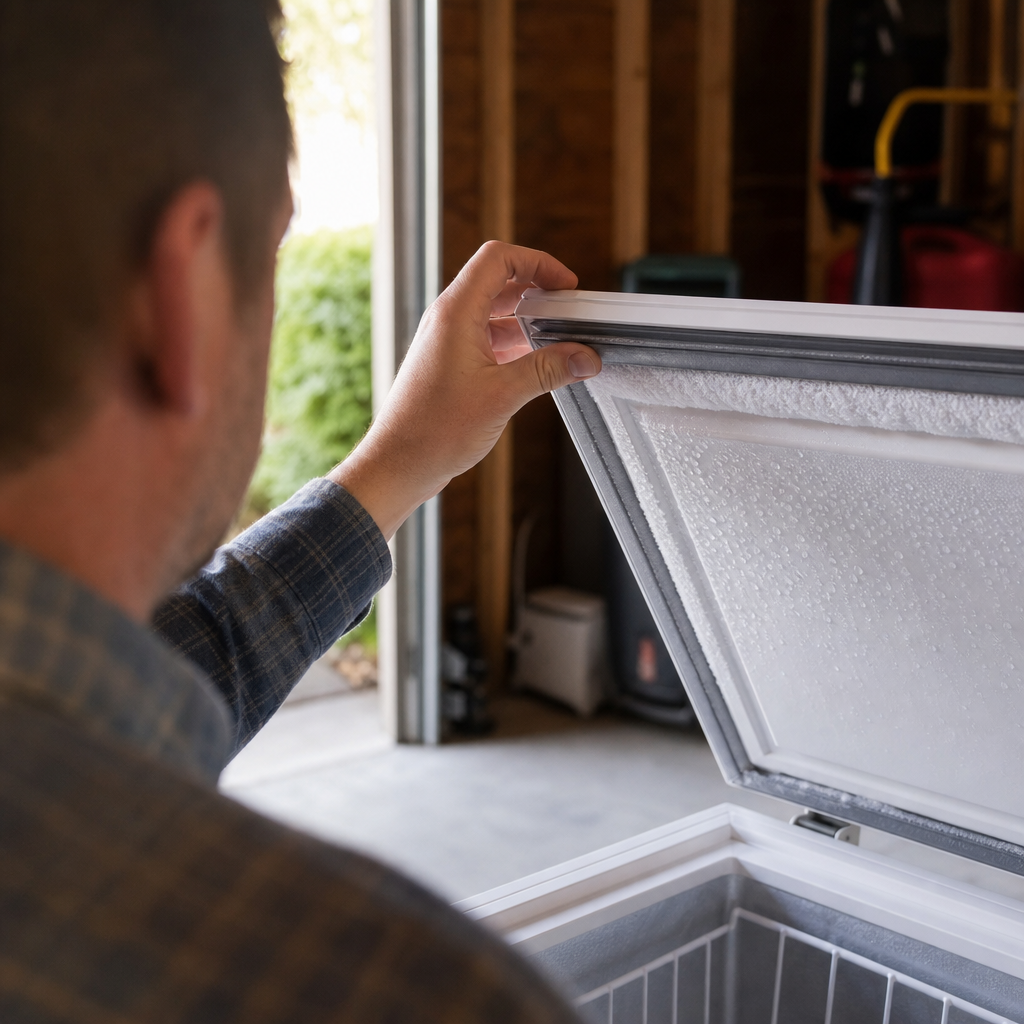
Uninsulated garages create hot, damp microclimates that push appliances beyond their design limits. When outdoor heat and humid air seep through unsealed drywall and open framing, the temperature difference drives moisture toward the cold freezer cabinet, regardless of the age or brand of the appliance.
Why Garage Freezers Struggle in Summer Heat
When garage temperatures climb and relative humidity pushes past 70%, moisture forces its way past appliance seals through vapor pressure. A case study of a specific commercial cold storage installation demonstrated that controlling ambient room vapor could lower internal freezer humidity from 80% down to 20%, eliminating ice buildup across cooling hardware. Controlling the room environment provides direct relief to the appliance compressor and seals.[4]
| Approach | Mechanism | Impact on Freezer Frost |
|---|---|---|
| Gasket Replacement | Restores the magnetic cabinet door seal | Blocks direct air leaks around the door frame |
| Room Dehumidification | Lowers surrounding water vapor levels | Reduces moisture pulled inside during door openings |
| Building Envelope Sealing | Blocks outdoor humidity and warm air intrusion | Stabilizes ambient climate and prevents chronic condensation |
Warm Air Infiltration and Vapor Drive
Gaps around unsealed hatches and ceiling penetrations can allow warm air into garage spaces, while concrete slabs may contribute to elevated ambient moisture. Because freezers lack active dehumidification cycles, they cannot extract moisture from continuous warm air leaks. According to building envelope specialists like Super Green Insulation Austin, installing radiant barriers, sealing ceiling gaps, and adding garage insulation stabilizes the air around the unit, protecting your equipment and reducing repair needs.
Actionable Steps to Eliminate Moisture in Deep and Chest Freezers
Need humidity in freezer?
We’re available now — call for a fast, free estimate.
Stopping persistent freezer humidity requires clearing internal drain paths, organizing storage for better airflow, and protecting the unit from humid surrounding air. Appliance maintenance resolves existing frost, but managing the surrounding room prevents the problem from returning.
Immediate Appliance Maintenance
- Defrost coils and clear drainage lines: Unplug the freezer to let all accumulated ice melt completely. Flush the internal drain line with warm water to clear debris or ice dams that force meltwater back into the bottom of the cabinet.
- Optimize storage layout: Packing the unit completely to the brim blocks airflow, while an empty freezer loses its cold air quickly when opened. Leave clearance around the interior perimeter so air circulates over the cooling surfaces.
Long-Term Climate and Humidity Management
Targeted insulation and air sealing help regulate room temperatures and lower moisture levels in garages and utility rooms. Sealing structural air leaks stops heavy humidity at the source, keeping storage areas dry and allowing cooling appliances to run efficiently year-round.
Frequently Asked Questions About Freezer Humidity and Home Climate Control
Managing the air around your appliances is the most dependable way to stop frost and condensation inside household freezers. When surrounding humidity stays balanced, vapor pressure drops, keeping damp air from overwhelming door seals and freezing over the coils.
What causes high humidity or moisture inside a deep freezer?
Moisture enters through damaged gaskets, frequent door openings, or hot, humid room air. Once warm air gets inside, it drops below its dew point, and the moisture instantly condenses and freezes into frost on the interior surfaces.
How do I reduce moisture and condensation in a chest freezer?
Check the lid gasket with the dollar bill test, avoid blocking internal air circulation, and defrost the unit completely to clear the drain tube. If the freezer is in a garage or utility space, take steps to lower the room humidity and seal building air leaks.
Does room humidity cause frost buildup in a freezer?
Yes. High ambient humidity creates continuous vapor pressure against door seals. Every time the door opens, warm, moisture-rich air replaces the cold air, quickly freezing across packages and evaporator coils.
How does a damaged door seal affect freezer performance?
A damaged gasket creates an open pathway for air exchange. Cold air spills out along the bottom while humid air enters through the top, causing thick frost formation, rapid temperature swings, and increased compressor runtimes.
What is the best way to stop garage freezer condensation in hot climates?
In hot and humid regions, address both the appliance and the building envelope. Replace worn seals on the unit, and seal gaps in the garage ceiling, walls, and attic hatches. Adding insulation and radiant barriers keeps the garage cooler and significantly lowers moisture levels around the freezer.
Need humidity in freezer?
We’re available now — call for a fast, free estimate.
Sources
- Energy Conservation Program for Consumer Products – federalregister.gov (2024)
- WHO PQS E003 RF01.4 – extranet.who.int (2020)
- RELATIVE HUMIDITY CONTROL IN REFRIGERATED FACILITIES – ishs.org (2005)
- Humidity Control for Freezer Facilities – desiccantair.com
- MANAGING HUMIDITY IN COLD STORE INSTALLATIONS – teddington.com
Related reading: Home Humidity Levels in Winter | Call Now-10% Off | Same-Day Service | Free Estimate
Related reading: Home Humidity in Winter – 10% Off & Free Estimate – Same-Day Service
Related reading: Lowering Humidity – Call Now-10% Off – Same-Day Service – Free Estimate
Frequently Asked Questions
What ambient room humidity level is ideal to prevent freezer frost?
Maintaining indoor relative humidity between 30% and 50% minimizes vapor pressure against appliance door gaskets and limits condensation when the cabinet opens. When ambient levels in garages or laundry rooms stay above 60%, outdoor moisture easily bypasses seals and freezes onto internal coils.
How does garage insulation reduce moisture inside a deep freeze?
Insulating perimeter walls and sealing ceiling penetrations blocks hot, humid outdoor air from penetrating the garage and driving vapor pressure against cold appliances. Super Green Insulation Austin notes that stabilizing ambient conditions around a freezer protects equipment seals and eliminates persistent sheet ice.
When should you get a home humidity assessment instead of an appliance repair?
If your freezer gaskets pass the dollar bill test but heavy frost returns immediately in a humid garage or utility room, the problem stems from ambient air infiltration rather than mechanical failure. Scheduling a home insulation and humidity assessment identifies envelope leaks and insulation gaps driving excess moisture into your living and storage spaces.
About the author
 |
Marcus Donovan Marcus Donovan is a certified energy auditor and home performance specialist with over 12 years of experience in the Austin construction industry. He holds a Bachelor of Science in Construction Management from Texas State University and focuses on residential and commercial energy efficiency. His practical knowledge covers everything from attic insulation retrofits to complex moisture control systems. |