
Quick Summary
Maintaining recommended indoor relative humidity levels between 30% and 60% often requires more than running an air conditioner, especially when unsealed attics and crawl spaces continually pull humid outdoor air into Central Texas homes. Super Green Insulation Austin highlights that lasting humidity control relies on targeted building envelope air sealing and crawl space vapor barriers to stop moisture infiltration at the structural source. Homeowners will understand the hidden causes of persistent indoor mugginess and can schedule a professional moisture and insulation assessment to permanently lower indoor humidity.
Lowering Humidity: Stop Moisture Leaks Fast
When lowering humidity in a home, running air conditioning and using mechanical dehumidifiers will provide immediate relief. For long-term humidity control, addressing building envelope leaks and managing moisture sources is essential. Persistent moisture problems often stem from unsealed attic penetrations and open crawl spaces that pull humid outdoor air directly into living spaces.
ASHRAE recommends maintaining indoor relative humidity between 30% and 60%, while reviews of health literature indicate that maintaining 40% to 60% relative humidity minimizes adverse health effects. If a home stays muggy despite running the AC, pinpointing air leaks and managing moisture sources can help resolve the problem at the source.[1]
What Is the Fastest Way to Lower Humidity in a Home?
To reduce indoor humidity quickly, start with mechanical removal and basic moisture control inside the house:
- Set your thermostat fan to “Auto”: Running the HVAC fan continuously can blow moisture resting on the evaporator coil back into living areas between cooling cycles.
- Run dedicated dehumidifiers: Use portable or dedicated dehumidifiers to extract moisture directly from the air in high-humidity areas.
- Run kitchen and bath exhaust fans: Vent cooking steam and shower moisture directly outside to reduce indoor moisture generation.
- Check outdoor drainage and irrigation: Ensure downspouts direct water away from the foundation and avoid soaking soil directly against exterior walls or foundation structures.
Maintaining Recommended Humidity Ranges
Reviews published in Environmental Health Perspectives show that keeping indoor relative humidity between 40% and 60% minimizes adverse health effects, including respiratory risks and allergen development. ASHRAE guidelines similarly recommend maintaining 30% to 60% relative humidity for indoor spaces.[4]
A portable dehumidifier handles a localized room, but as specialists at Super Green Insulation Austin note, substantial air leakage from unsealed attics or crawl spaces can continuously introduce humid outdoor air into living areas, making envelope sealing and source control important elements of moisture management.
Why Is My House Humid Even with the AC Running?
Air conditioners cool and dehumidify at the same time, but they require proper sizing and runtime to remove moisture effectively. If a home feels humid while the AC is running, common causes include thermal bypass air leaks and oversized cooling equipment.
The Attic Thermal Bypass Effect
During hot weather, warm and humid attic air can enter living spaces through unsealed openings due to pressure differences inside the home:
- Gaps around recessed ceiling lights and ceiling fan boxes
- Open chases around plumbing stacks and HVAC ductwork
- Uninsulated and unsealed attic access hatches and pull-down stairs
- Top-plate gaps along interior partition walls
When humid attic air enters the living space, it increases the indoor moisture load, keeping humidity high even while room temperatures drop.
AC Short-Cycling
If an air conditioner is oversized for the home, it cools the indoor air down to the thermostat setpoint quickly and shuts off before running long enough to remove moisture across the evaporator coil. Short cooling cycles leave the temperature cool while relative humidity remains high.
Crawl Space Ground Moisture
Homes built on crawl space foundations can experience moisture moving upward from below:
- Ground Evaporation: Exposed soil beneath the home releases moisture vapor into the crawl space.
- Subfloor Migration: Moisture vapor moves through wooden subfloors and structural floor framing.
- Indoor Infiltration: Air pressure differences draw humid air into living areas, raising indoor humidity levels.
Air Sealing and Moisture Control Observations
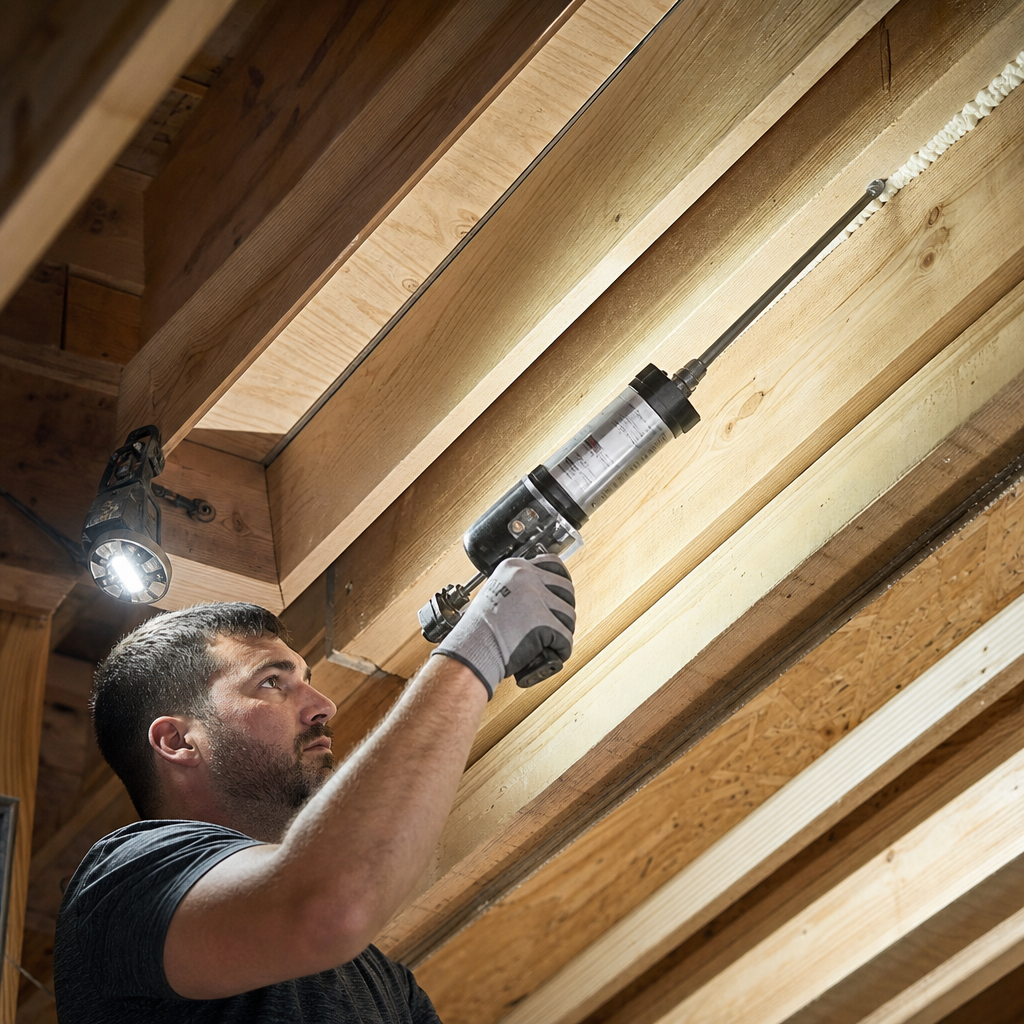
According to building envelope assessments by Super Green Insulation Austin, addressing physical openings where humid air enters reduces the continuous cycle of moisture infiltration into conditioned spaces.
In a CDC indoor air quality study assessing monitored building environments, 42% of indoor humidity readings were below 40% RH, while 7% rose above 60% RH.[3]
Methods for Lowering Humidity: General Moisture-Control Guidance
Managing indoor dampness requires combining mechanical moisture removal, ventilation, and envelope air sealing to maintain indoor relative humidity within the recommended range of 30% to 60% (with 40% to 60% minimizing adverse health effects):[2]
- Air Conditioning: Ensure systems are properly sized so that cooling cycles run long enough to remove moisture effectively.
- Dehumidification: Use dedicated dehumidifiers in high-humidity areas to extract water vapor directly from the air.
- Ventilation: Operate bathroom and kitchen exhaust fans during and after moisture-producing activities to vent humid air outside.
- Source Control: Maintain site drainage to move water away from foundations and manage crawl space ground moisture.
- Air Sealing: Seal gaps and bypasses in ceilings, duct chases, and foundation boundaries to reduce the infiltration of humid outdoor air.
How to Choose a Moisture Control Professional
When selecting a contractor to inspect and address indoor moisture problems, look for professionals who understand building science and evaluate the entire building envelope.
Hiring Checklist
- Diagnostic approach: Ensure they inspect attic top plates, duct chases, ceiling fixtures, and crawl spaces to find actual air and moisture leak sources.
- Proper credentials: Verify appropriate licensing, general liability insurance, and workers’ compensation coverage.
- Upfront, transparent pricing: Work with contractors who provide clear, written estimates for recommended air sealing and moisture control measures.
- Comprehensive scope: Prioritize professionals who assess both mechanical equipment performance and structural air leakage pathways.
Frequently Asked Questions About Lowering Humidity
What is the ideal indoor humidity level for a home?
ASHRAE recommends maintaining indoor relative humidity between 30% and 60%, while health literature reviews indicate that maintaining 40% to 60% relative humidity minimizes adverse health effects such as respiratory irritation and allergen growth.[5]
How does air sealing help reduce indoor humidity?
As highlighted by Super Green Insulation Austin, air sealing closes structural gaps and bypasses between the attic, crawl space, and living areas. This prevents humid outdoor air from leaking into ceilings and walls, reducing the moisture burden on cooling and dehumidification equipment.
What are effective ways to control crawl space moisture?
Effective crawl space moisture control involves managing exterior drainage away from the foundation, covering exposed earth to limit ground evaporation, and sealing openings between the crawl space and the living space above.
Why is my house humid even with the AC running?
This typically happens when warm, humid air leaks into the home through unsealed gaps in the building envelope faster than the AC can remove it, or when an oversized air conditioner short-cycles, cooling the air before sufficient moisture can be removed.
Sources
- INDOOR HUMIDITY LEVELS AND ASSOCIATIONS WITH … – pmc.ncbi.nlm.nih.gov (2024)
- The Year's Weather 2025 – A Stormy 2025 – hko.gov.hk (2025)
- Indoor Humidity Levels and Associations with Reported … – stacks.cdc.gov (2022)
- Environmental Health Perspectives – ncbi.nlm.nih.gov
- LIMITING INDOOR MOLD AND DAMPNESS IN BUILDINGS – ashrae.org (2022)
Related reading: Inside Home Humidity – 10% Off & Free Estimate – Same-Day Service
Related reading: Home Humidity Levels in Winter | Call Now-10% Off | Same-Day Service | Free Estimate
Related reading: Home Humidity in Winter – 10% Off & Free Estimate – Same-Day Service
Frequently Asked Questions
How can I tell if high indoor humidity is caused by attic air leaks rather than an AC problem?
If your home feels cold yet clammy, or if rooms directly beneath the ceiling stay noticeably muggier than lower floors, humid attic air is likely bypassing structural gaps. Super Green Insulation Austin can evaluate your building envelope to pinpoint whether moisture issues stem from ceiling penetrations or HVAC short-cycling.
How does installing a crawl space vapor barrier assist in lowering humidity?
A crawl space vapor barrier covers exposed earth beneath the home, stopping ground water evaporation from migrating upward through structural framing and subfloors. Combining barrier installation with subfloor air sealing blocks rising dampness and significantly eases the moisture load on your air conditioning.
What happens during a professional home moisture and insulation assessment?
Technicians inspect critical building envelope boundaries, including attic top plates, recessed lights, duct chases, and crawl spaces, to identify hidden air and moisture bypasses. An assessment from Super Green Insulation Austin provides an upfront estimate detailing the specific air sealing and vapor barrier solutions needed for lasting humidity control.
About the author
 |
Marcus Donovan Marcus Donovan is a certified energy auditor and home performance specialist with over 12 years of experience in the Austin construction industry. He holds a Bachelor of Science in Construction Management from Texas State University and focuses on residential and commercial energy efficiency. His practical knowledge covers everything from attic insulation retrofits to complex moisture control systems. |