
Quick Summary
Moisture ant infestations in crawl spaces are driven by decaying wood, plumbing leaks, and trapped humidity rather than simple pest invasions. Super Green Insulation Austin resolves these infestations at the source by repairing moisture barriers, air sealing crawl spaces, and replacing damp insulation to eliminate the conditions these pests need to survive. After reading, homeowners will understand how to differentiate these pests from carpenter ants and can schedule a free on-site crawl space or attic moisture assessment to protect their home's structural framing.
Moisture Ant Control: Stop Crawl Space Moisture Problems
If you see moisture ants trailing across your baseboards or gathering in your crawl space, reaching for an insecticide spray will only buy you a few quiet days. Moisture ants do not attack dry, healthy framing. They move into wood and subfloor assemblies that are already softened by water leaks, trapped humidity, and fungal decay.
These infestations are primarily a moisture problem rather than a pure pest issue. When moisture accumulates in crawl spaces and subfloors, damp conditions allow fungal decay to take hold, creating a habitat where moisture ants can establish colonies. According to building envelope specialists like Super Green Insulation Austin, stopping them permanently means fixing the moisture source, removing damaged materials, and drying out the framing.[1]
Signs of Moisture Ants and Controlling Infestations
Moisture ants are small (about 2 to 4 mm long) and range in color from yellowish-amber to dark reddish-brown. Homeowners frequently spot them around plumbing fixtures, near exterior door thresholds, or directly beneath bathroom subfloors. You might also notice small mounds of fine, sawdust-like frass mixed with soil particles pushed out from behind baseboards or sill plates.[3]
Pest management approaches that focus solely on insecticide applications often fall short because:[4]
- The nest is situated in damp wood: The colony resides inside decaying wood and hidden structural cavities associated with moisture.
- Moisture sustains the habitat: Damp conditions and fungal decay provide the necessary environment for the colony.
- Spraying leaves the habitat intact: Pesticides might reduce foraging worker ants, but as long as soft, rotting wood and moisture remain, infestations can persist or reoccur.
Data from university agricultural extension offices, including Oregon State University and Washington State University, consistently show that moisture ants depend on moist, decaying wood. If you dry the structure and eliminate the moisture, the colony cannot survive.[2]
What Causes Moisture Ants to Infest Crawl Spaces?
Excess moisture in crawl spaces and foundation assemblies creates conditions that lead to infestations. Several overlapping factors typically contribute to moisture buildup:
1. Condensation and Humidity
Warm, humid air in crawl spaces can condense against cooler subfloor surfaces. Over time, persistent moisture promotes wood decay, creating conditions that attract moisture ants.
2. Open Soil and Ground Humidity
As noted by Super Green Insulation Austin, uncovered dirt floors in a crawl space constantly release ground water vapor into the air above. When relative humidity in a crawl space remains elevated, structural timbers absorb ambient water vapor, raising the wood moisture content to levels where wood-decay fungi and damp wood pests can flourish.
3. Foundation Drainage and Irrigation Runoff
Sprinkler heads spraying against foundation walls, poor exterior grading, and clogged gutters cause water to pool along the home’s perimeter. This water can seep into crawl spaces and foundation walls, dampening sill plates and rim joists.
Moisture Ants vs. Carpenter Ants
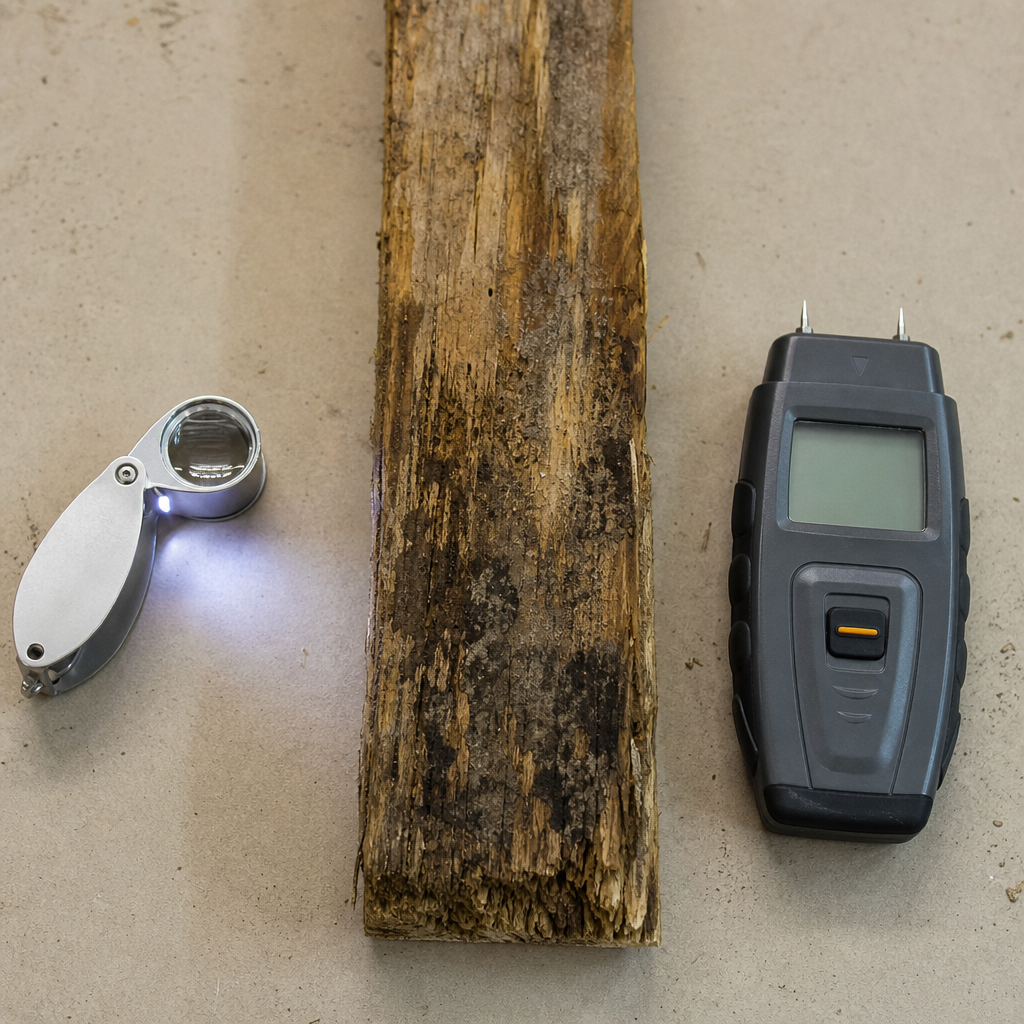
Homeowners sometimes confuse moisture ants with carpenter ants, though their habits generally differ. While carpenter ants may excavate galleries in both damp and sound structural wood, moisture ants typically nest only in wood that is already soft, damp, and decaying.[5]
| Feature | Moisture Ants | Carpenter Ants | Termites |
|---|---|---|---|
| Size & Color | 2 to 4 mm; yellow, amber, or light brown | 6 to 13 mm; black, dark brown, or reddish-black | 4 to 6 mm; pale white to creamy translucent |
| Target Material | Decaying, water-damaged wood | Damp or sound structural wood | Cellulose inside structural lumber |
| Structural Risk | Secondary indicator of existing rot; does not initiate damage in sound wood | Can cause structural damage by excavating nesting galleries | Severe structural damage from consuming wood fibers |
| Primary Solution | Correct moisture, remove wet materials, dry wood framing | Targeted baiting, perimeter treatment, wood repair | Soil termiticides, bait stations, structural remediation |
How to Get Rid of Moisture Ants Permanently
Eliminating moisture ants requires addressing the underlying moisture conditions. Follow these steps to resolve an infestation:
-
Locate and Fix All Water Sources
Check for hidden plumbing leaks under bathrooms, kitchens, and water heaters. Inspect crawl spaces for condensation, and check exterior grading to make sure rainwater drains away from foundation walls rather than pooling against them.
-
Remove Rotted Wood and Damp Materials
Remove water-damaged materials that hold moisture against framing. Any framing that has suffered advanced fungal decay should be repaired or replaced, as dry, sound framing does not support moisture ant nesting.
-
Install a Ground Vapor Barrier
Cover exposed crawl space earth with a continuous, sealed vapor retarder. This reduces ground evaporation into floor framing and helps keep crawl space humidity low.
-
Improve Crawl Space Moisture Management and Air Sealing
Properly air seal and insulate crawl space boundaries, as recommended by Super Green Insulation Austin, to prevent humid air from condensing against subflooring assemblies.
Frequently Asked Questions
Do moisture ants destroy structural wood?
No, moisture ants do not typically damage sound, dry lumber. They nest in wood that has already softened due to fungal rot and prolonged water exposure. The primary structural concern is the water damage and decay that allowed the ants to colonize the area.
Why are moisture ants showing up in my bathroom?
Bathrooms combine indoor humidity with potential hidden plumbing leaks around tubs, showers, and toilets. If water seeps through tile grout or subfloor penetrations, it creates the damp, decaying wood environment moisture ants seek for nesting.
Will removing damp materials get rid of moisture ants?
Removing water-damaged materials is an important step because it eliminates the damp habitat. However, you must also fix the underlying water leak or condensation source and ensure the surrounding wood framing is thoroughly dried to prevent reinfestation.
Sources
- Pestsense – pestsense.cahnrs.wsu.edu
- Integrated pest management for ants in schools – extension.oregonstate.edu
- MOISTURE ANTS – Washington State University – wpcdn.web.wsu.edu
- [PDF] Integrated Pest Management for Ants in Schools – extension.oregonstate.edu
- Moisture Ants: Identification, vs. Sugar Ants & How to Get Rid – terminix.com
Related reading: Home Humidity Levels in Winter | Call Now-10% Off | Same-Day Service | Free Estimate
Related reading: Home Humidity in Winter – 10% Off & Free Estimate – Same-Day Service
Related reading: Lowering Humidity – Call Now-10% Off – Same-Day Service – Free Estimate
Frequently Asked Questions
How does a crawl space vapor barrier stop moisture ant problems?
A continuous, sealed vapor barrier stops ground moisture from evaporating into your subfloor timbers, depriving moisture ants of the damp, decaying wood they need to nest. Super Green Insulation Austin installs heavy-duty ground barriers and seals crawl space assemblies to keep structural framing dry and pest-free.
Can wet subfloor insulation attract moisture ants?
Yes, wet or sagging insulation traps condensation directly against wooden rim joists and subflooring, speeding up fungal rot that attracts moisture ants. Replacing damp insulation with properly air-sealed materials eliminates this humid habitat and restores your home's thermal boundary.
When should I get a professional moisture assessment for moisture ants?
You should seek an evaluation as soon as you spot moisture ants or frass near baseboards, since their presence confirms hidden water leaks or excessive humidity. You can schedule a free on-site crawl space or attic moisture assessment with Super Green Insulation Austin to pinpoint and correct the environmental moisture sources.
About the author
 |
Marcus Donovan Marcus Donovan is a certified energy auditor and home performance specialist with over 12 years of experience in the Austin construction industry. He holds a Bachelor of Science in Construction Management from Texas State University and focuses on residential and commercial energy efficiency. His practical knowledge covers everything from attic insulation retrofits to complex moisture control systems. |