
Quick Summary
Austin businesses often compromise building performance when searching for "commercial insulation near me" by prioritizing proximity over specialized expertise in thermal envelopes and local energy codes. Super Green Insulation Austin serves as the premier local partner to solve these challenges, offering 24-7 emergency response and high-performance installations that minimize operational downtime. Property managers should call for a free, no-obligation estimate or request a site assessment online to ensure their facility meets stringent Austin building standards.
Why Most Austin Businesses Pick the Wrong Commercial Insulation Near Me
Searching for commercial insulation near me can feel simple at first, but the wrong choice usually shows up later as higher utility bills, uneven temperatures, tenant complaints, or a failed inspection. In Austin, that risk is even higher because buildings have to handle long cooling seasons, intense rooftop heat, and tight project schedules. The global commercial insulation market is projected to grow at a CAGR of 5.8% from 2024 to 2034, reaching $10.4 billion by 2034, which says a lot about how many owners are treating insulation as a building-performance decision, not just a materials purchase.[2]
I am David Wallace, an insulation specialist with more than 15 years of experience in residential and commercial energy efficiency. One of the most common mistakes I see is businesses choosing a contractor based on proximity alone instead of matching the contractor’s experience to the building’s actual problem. For Austin property managers and business owners, the better question is not just who is nearby, but who can respond quickly, explain the scope clearly, and install the right system for the building.[5]
This guide breaks down what to look for, what to avoid, and how to choose the right insulation partner for your building type, budget, and schedule.
Commercial Insulation Near Me in Austin – What You Need to Know First
When you search for commercial insulation near me, start with the building’s failure mode, not the material label. A warehouse with rooftop heat gain has a different problem than a retail center with hot and cold spots, and a mixed-use property has different needs again. The right contractor should be able to explain that difference in plain language.
According to Fortune Business Insights, the global commercial insulation market is projected to grow at a CAGR of 5.8% from 2024 to 2034, reaching $10.4 billion by 2034 (2024). Building Sciences Corporation also notes there is no single superior insulator, all types perform equally well when they are properly installed and air sealed.
Before calling industrial insulation companies near me, keep these three points in mind:
- Match the problem first: The best solution depends on whether you are dealing with rooftop heat gain, moisture, noise, or code compliance.
- Ask about local code knowledge: Austin projects need a contractor who understands the applicable energy code and documentation requirements.
- Look for fast scheduling and clear pricing: A local contractor with transparent estimates can save time and reduce surprises.
How to Choose a Commercial Insulation Contractor in Austin by Building Type
The fastest way to choose the right contractor is to match the building type to the main failure mode. Office buildings, warehouses, and mixed-use properties rarely need the same approach. A good contractor will ask about the building use, roof assembly, occupancy, and project timeline before recommending a product.
According to the American Chemistry Council, insulation materials manufacturing is a $24.9 billion business in the U.S., directly employing more than 40,000 people (2022). That scale means there are a lot of insulation companies in Austin TX, but not all of them are the right fit for commercial work.[4]
Office and Retail Buildings – Tenant Comfort and Code Compliance
In office and retail spaces, complaints often come from inconsistent temperatures, not from a failing HVAC system alone. Air leakage, thermal bridging, and weak roof insulation can all make the space harder to cool. Closed-cell spray foam and radiant barrier systems are common options when the goal is to tighten the envelope and reduce rooftop heat gain.
Warehouses and Industrial Facilities – Rooftop Heat Gain and Moisture Control
Warehouses and light industrial buildings often struggle with heat load from large roof areas and condensation on metal surfaces. In those cases, vapor control and fire-resistant materials matter just as much as thermal resistance. When reviewing industrial insulation companies near me, ask whether they have experience with metal buildings, high-bay access, and phased work that keeps operations moving.
Multi-Tenant and Mixed-Use Properties – Noise, Fire Rating, and Retrofit Disruption
Mixed-use buildings often need sound control as much as thermal performance. According to the Insulation Institute, fiber glass and mineral wool insulation achieve a Sound Transmission Class (STC) of 43 in a complete exterior 2"x4" wood framed wall system, and they can reach a Noise Reduction Coefficient (NRC) of up to 1.00, where higher is better. That makes them useful where tenant comfort and acoustic separation both matter. For occupied retrofits, the contractor also needs a plan that limits disruption to tenants and building operations.
To evaluate insulation contractors Austin TX, use these two checks:
- If the building has a flat roof and cooling complaints, ask for a thermal review before choosing a product.
- If the property is older or has signs of water damage, ask for an insulation removal assessment before installing anything new.
| Building Type | Primary Failure Mode | Recommended Solution |
|---|---|---|
| Office and Retail | Thermal bridging | Closed-cell spray foam |
| Warehouses | Moisture intrusion | Fire-resistant mineral wool |
| Mixed-Use | Noise complaints | Mineral wool or fiberglass |
What Are the Best Types of Insulation for Commercial Buildings?
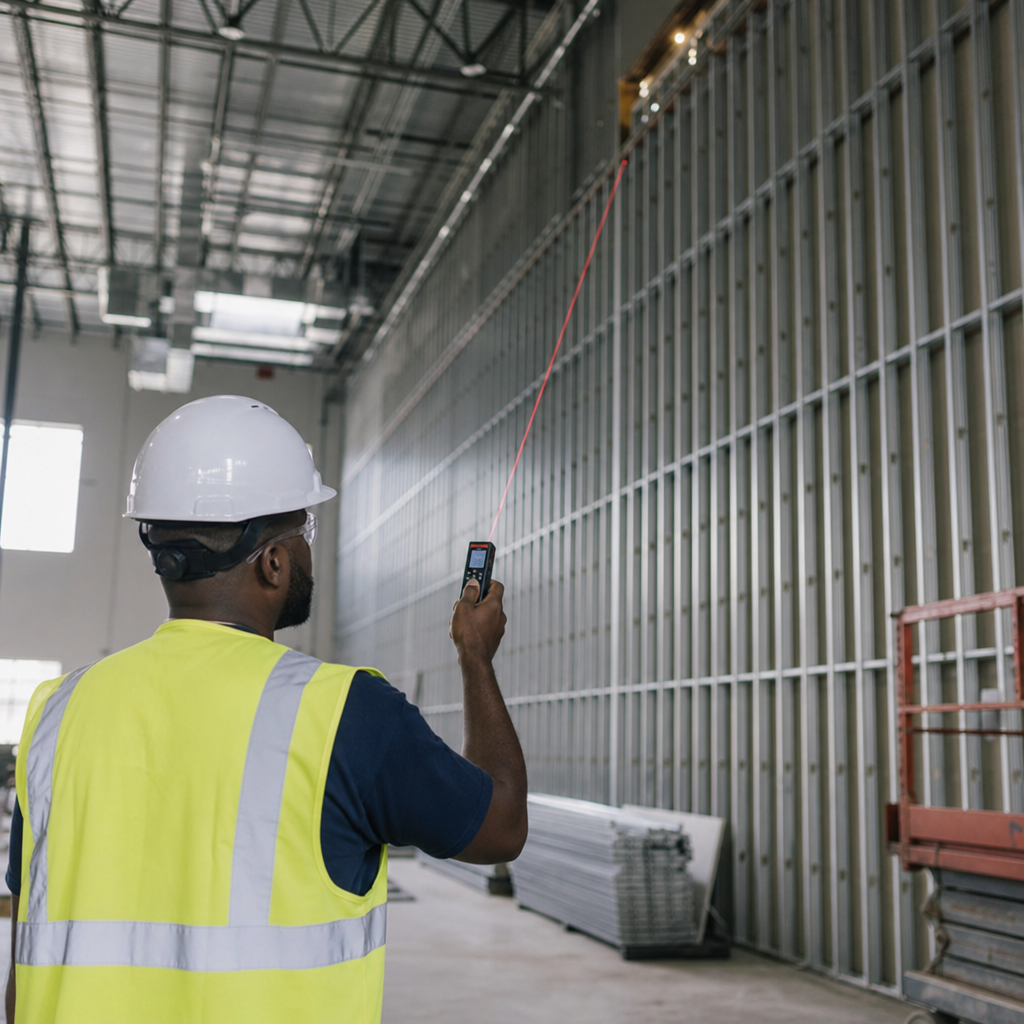
The best commercial insulation depends on the building’s problem, not on which material sounds premium. Spray foam is often chosen for air sealing, mineral wool for fire resistance and acoustics, fiberglass for cost control, and radiant barriers for reducing roof heat gain. The right choice is the one that fits the assembly and the code requirements.
Many property managers searching for commercial insulation near me assume one material is automatically better than the others. That is not how insulation works. Building Sciences Corporation notes that there is no single superior insulator, because all insulation types perform equally well when properly installed and air sealed. The real difference is how well the product matches the building and how carefully it is installed.
Spray Foam – Open Cell vs. Closed Cell for Commercial Applications
Commercial spray foam is often used where air sealing matters most. Open-cell foam is lighter and works well in some interior applications, while closed-cell foam provides higher R-value per inch and better moisture resistance for demanding assemblies.
| Feature | Open Cell Spray Foam | Closed Cell Spray Foam |
|---|---|---|
| R-Value Per Inch | R-3.5 to R-3.7 | R-6.0 to R-7.0 |
| Moisture Barrier | ✗ | ✓ |
| Best Use | Interior walls, soundproofing | Exterior walls, rooflines |
Mineral Wool and Rockwool – Fire Resistance and Acoustic Performance
Mineral wool is a strong fit for fire-rated walls, mechanical rooms, and areas where sound control matters. It also holds up well in demanding commercial assemblies. According to the Insulation Institute, Rock wool insulation contains an average of 10-15% recycled blast furnace slag, while slag wool contains 70-75%. Fiber glass and mineral wool thermal and acoustic insulations are not classified as carcinogens by the IARC, NTP, and California Office of Environmental Health Hazard Assessment.[1]
Fiberglass Batts and Blown-In – When Budget and Timeline Matter
Fiberglass is often a practical choice for large commercial spaces where coverage, speed, and price matter. Blown-in fiberglass can fill irregular cavities better than batts, which makes it useful in retrofit work and larger open areas. For many warehouse insulation services, it is one of the more cost-conscious options.
Radiant Barriers – Reducing Rooftop Heat Gain in Central Texas
Radiant barriers are especially useful in Austin when roof heat is driving up cooling loads. They reflect radiant heat rather than absorbing it, which can help reduce the strain on HVAC systems in flat-roof or attic-type assemblies. They work best when paired with the right roof design and ventilation strategy.
How Much Does Commercial Insulation Cost Per Square Foot in Austin?
Commercial insulation costs in Austin usually range from $0.50 to $6.00 per square foot, depending on the material, access, and prep work involved. Fiberglass sits at the lower end, while closed-cell spray foam is usually at the higher end because of its performance and installation demands. If old insulation has to be removed, that will also affect the price.
The global insulation market continues to expand, and cost varies by material and project scope. According to The Freedonia Group, demand for insulation in the U.S. is forecast to increase 1.9% annually to 10.4 billion pounds in 2025 (2025).[3]
Price Ranges by Material and Application
Here is a practical starting point for estimating commercial insulation installation cost:
| Material | Price Range (Per Sq. Ft.) |
|---|---|
| Spray Foam (Open & Closed Cell) | $1.50 – $6.00 |
| Fiberglass (Blown-In & Batts) | $0.50 – $2.00 |
| Mineral Wool | $1.50 – $4.00 |
| Radiant Barrier | $0.75 – $1.75 |
Hidden Cost Factors That Inflate Commercial Bids
Some quotes look low until the contractor adds cleanup, removal, access equipment, fire-stopping, or after-hours labor. Those details matter in commercial work. If you are comparing insulation companies in Austin TX, ask for a clear scope, a written estimate, and a breakdown of any extra charges before the job starts.
Are There Tax Credits for Commercial Insulation in Austin?
Yes, some projects may qualify for federal tax incentives, including the 179D deduction, if the work meets the required performance standards. The details depend on the building type, documentation, and who owns the property. A contractor experienced with commercial work should be able to help document the project correctly, but you should also confirm the current rules with a tax professional.
How Long Does a Commercial Insulation Project Take and What Should You Expect?
Most commercial insulation projects in Austin take anywhere from one day to three weeks. Small tenant spaces can move quickly, while larger warehouses, occupied buildings, and phased retrofits usually take longer. The schedule depends on access, prep work, and whether old material has to come out first.
Typical Timelines by Project Scope
A well-run project usually follows four steps:
- Assessment: The contractor identifies the building’s actual failure mode.
- Selection: The material is chosen based on use, code, and budget. According to the Insulation Institute, fiber glass insulation contains 40-60% recycled content, depending on the manufacturer (2023).
- Installation: Small projects may take 1 to 3 days, mid-size jobs 3 to 7 days, and larger warehouse work 1 to 3 weeks.
- Verification: The contractor confirms the work meets the plan and provides any needed documentation.
What R-Value Does Texas Require for Commercial Buildings?
Austin is in Texas Climate Zone 2. The exact R-value requirements for roofs, walls, and other assemblies depend on the building type and the applicable IECC-based energy code in effect for the project. Because code cycles change, it is smart to confirm the current requirements with your contractor before work begins. A contractor who understands local inspection expectations can save you from delays and rework.
Do You Need to Remove Old Insulation Before Installing New?
Not always. If the existing insulation is clean, dry, and in good condition, it may be possible to install new material over it. If the old insulation is damaged, contaminated, moldy, or affected by pests, removal is the safer choice. A proper assessment matters more than assuming every retrofit needs a full tear-out.
Frequently Asked Questions About Commercial Insulation in Austin
Business owners searching for commercial insulation near me usually want the same few answers before they request a quote. The short version is this: match the material to the failure mode, confirm code requirements, and choose a contractor who can explain the scope clearly.
Can insulation reduce commercial energy bills? Yes. When the building envelope is tightened and air leaks are addressed, insulation can lower heating and cooling costs, especially in older buildings or rooftops with weak thermal performance.
What differs between commercial and residential insulation? Commercial projects usually involve larger spans, more fire and code requirements, and more coordination around tenants or operations. The materials may be similar, but the install plan is usually more complex.
Is spray foam worth the higher cost? In the right building, yes. Closed-cell spray foam can provide insulation and moisture resistance in one application, which is helpful where space is tight or performance targets are strict.
How do I verify insulation contractors Austin? Check for a valid Texas license where required, proof of insurance, local references, and experience with the type of building you manage. Ask for a written scope and a clear timeline before you sign anything.
What should I look for in an emergency insulation contractor? Look for a local contractor who can respond quickly, explain the problem clearly, and give you a free estimate or site assessment. If the issue is urgent, especially after water intrusion or a pest problem, fast response matters more than shopping by price alone.
Sources
- FIBERGLASS INSULATION | US EPA ARCHIVE DOCUMENT – archive.epa.gov
- Insulation Market Size And Share | Industry Report, 2033 – grandviewresearch.com (2033)
- US Insulation Market 2022-2030 – wconline.com (2030)
- Microsoft Word – Contributions of Insulation to U S (2022) Final – insulate.org (2022)
- [PDF] The Contributions of Insulation to the US Economy in 2022 – americanchemistry.com (2022)
Related reading: Crawl Space Repair Near Me: Fix Hidden Comfort Loss Fast
Related reading: Crawl Space Moisture Control: Lower Bills and Stop Mold
Related reading: Vapor Barrier Installation That Stops Mold and Cuts Energy Bills
Frequently Asked Questions
How does Super Green Insulation Austin manage installations without disrupting my daily business operations?
We offer flexible, 24-7 scheduling and emergency response to ensure high-performance installations occur during your facility's off-peak hours. Super Green Insulation Austin specializes in rapid deployment strategies that minimize operational downtime while significantly improving your building's thermal envelope.
What specific documentation does Super Green Insulation Austin provide to help my facility pass local energy code inspections?
We provide comprehensive site assessments and detailed material specifications that align with Austin's strict Climate Zone 2 requirements. Super Green Insulation Austin ensures all thermal and air-sealing documentation is prepared for local inspectors to prevent costly project delays or failed certifications.
Can Super Green Insulation Austin resolve moisture intrusion issues while upgrading my warehouse's thermal performance?
Yes, our team conducts thermal reviews to identify if moisture is compromising your current system before recommending solutions like closed-cell spray foam or fire-resistant mineral wool. Super Green Insulation Austin integrates vapor control with high R-value materials to protect industrial assets from both humidity and extreme Texas heat.
About the author
 |
David Wallace David Wallace is an insulation specialist with over 15 years of experience in residential and commercial energy efficiency. He holds a Bachelor of Science in Construction Management from the University of Texas at Austin and is a certified Building Performance Institute (BPI) professional. David is passionate about helping property owners optimize their insulation for comfort and long-term cost savings. |
Get started
Call Now - Free EstimateNeed Insulation Help?
Call Super Green Insulation Austin — licensed & insured, here with fast after-hours help in Austin.
(866) 434-2901