
Quick Summary
Maintaining correct home humidity between 30% and 50% is vital for preventing mold and reducing cooling costs, yet outdoor moisture frequently infiltrates living spaces through unsealed attics and damp crawl spaces. Building envelope upgrades from Super Green Insulation Austin – such as attic air sealing, specialized insulation, and heavy-duty crawl space vapor barriers – stop inward vapor drive more effectively and economically than standalone dehumidifiers. After reading this guide, homeowners will understand how to identify structural moisture pathways, seal critical ceiling penetrations, and balance mechanical ventilation to stabilize indoor humidity levels year-round.
Correct Home Humidity: Stop Attic Moisture and Cut AC Bills
If your air conditioner runs constantly during a Texas summer but the house still feels clammy, a contributing factor may be outdoor moisture infiltrating through the building envelope. Maintaining the correct home humidity keeps your living space comfortable, protects framing from mold, and keeps electric bills manageable. While standard indoor targets range from 30% to 50% relative humidity, high outdoor heat and humidity can contribute to vapor movement downward through unsealed attic floors and upward through damp crawl spaces, adding to your HVAC system’s workload.[4]
Portable dehumidifiers and thermostat tweaks only address part of the problem. As energy specialists at Super Green Insulation Austin point out, air sealing and insulation can help reduce moisture intrusion. This guide covers how to track indoor moisture, identify where humid air may infiltrate your home, and address the structural pathways that keep your AC working overtime.
What You Need to Achieve and Maintain Correct Home Humidity
Quick Summary: Most healthy homes maintain relative humidity between 30% and 50%. In summer, keeping levels below 50% helps prevent mold growth. During colder winter stretches, maintaining 30% to 35% prevents window condensation while keeping dry indoor air comfortable.[2]
Controlling indoor humidity requires looking beyond mechanical cooling. Standard air conditioners lower sensible temperature, but when warm, humid attic air leaks into living spaces, the cooling system may struggle with the latent moisture load.
Essential Tools and Target Metrics
According to building science guidelines, indoor relative humidity should remain between 30% and 50% under normal conditions. Health Canada recommends keeping levels under 50% during summer months and between 30% and 35% in winter to stop condensation on cool surfaces. The Building Science Corporation notes that sustained indoor humidity above 60% creates an environment that increases the risk of mold growth.[1]
To identify where moisture enters your home, start with a few basic diagnostic tools:
- Digital thermo-hygrometers: Inexpensive monitors to track temperature and humidity differences between floors.
- Expanding foam and acoustic caulk: Sealants used to close attic bypasses around wiring, plumbing chases, and lighting fixtures.
- Heavy-duty vapor retarders: 12-to-20 mil reinforced polyethylene sheeting to block ground moisture evaporation in crawl spaces.
Step 1: Measure Baseline Relative Humidity Across Key Living Zones
Before spending money on equipment or insulation upgrades, take baseline measurements across your house. Tracking readings room by room shows whether high moisture comes from everyday living activities, like cooking and showers, or structural air leaks pulling in outside air.
Summer vs. Winter Target Ranges
ASHRAE Standard 62 is cited in research as establishing ventilation-related upper and lower bounds of 25% to 60% relative humidity, rather than serving as a standalone comfort target. In hot-humid climates, maintaining summer indoor air below 50% helps prevent musty odors and sticky conditions. In winter, aiming for 30% to 35% helps prevent warm indoor air from condensing against cold window glass or exterior framing.[3]
Identifying Microclimates in Upper Levels and Crawl Spaces
To find where outside air enters your home, follow a simple tracking process:
- Place hygrometers on every level, making sure to include upstairs bedrooms, hallways near attic access hatches, and ground-floor rooms above crawl spaces.
- Check readings twice daily: once during peak afternoon heat when attic temperatures peak, and once in the early morning.
- Note physical signs of moisture, such as condensation along window frames, musty closets, or rooms that feel noticeably muggier than the main floor.
Step 2: Diagnose Attic Air Infiltration and Vapor-Drive Failures
Need correct home humidity?
We’re available now — call for a fast, free estimate.
In hot climates, the attic can serve as a primary pathway for heat and moisture. When the sun heats a roof assembly, high attic temperatures build vapor pressure. Under this solar vapor drive hypothesis, humid air is driven downward through drywall gaps into living areas.
How Attic Heat Drives Moisture Downward
Unsealed ceiling penetrations act like open pathways. Recessed can lights, bathroom vent fans, plumbing vents, and attic hatch doors allow warm, humid attic air to slip into your home. While cold climates face indoor moisture escaping outward during winter, hot-humid regions face the reverse dynamic, with outdoor humidity pushing inward.
Why Air Conditioning Alone Cannot Fix High Humidity
Air conditioners remove moisture while cooling the air, but they need sufficient run time to do so effectively. When warm attic air leaks into living spaces, the thermostat senses rising temperatures and cycles the system on. If the AC cools the air rapidly, it may shut off before pulling sufficient moisture from the air, leaving the indoor space feeling clammy and increasing energy use.
Step 3: Seal and Insulate the Attic Building Envelope
As emphasized by Super Green Insulation Austin, air sealing bypasses before adding insulation helps reduce the movement of damp attic air into conditioned spaces, which can help support indoor humidity control and reduce cooling loads.
Closing Ceiling Penetrations and Chases
Air sealing should happen before adding insulation. Focus on these key leakage zones:
- Seal wall top plates, wire drops, and plumbing vent pipes with expanding polyurethane foam.
- Seal HVAC duct boots and bathroom exhaust housings to the drywall ceiling using mastic sealant or foil-faced tape.
- Build airtight covers over non-IC rated recessed can lights, or upgrade to airtight, IC-rated LED fixtures sealed directly to the ceiling surface.
- Add durable weatherstripping and rigid insulation to the back of the attic hatch or pull-down stair lid.
Insulation and Air Sealing Strategies
Upgrading attic thermal resistance significantly cuts heat transfer, but the choice of materials should match your roof and ventilation setup.
| Insulation Strategy | Primary Application | Moisture & Thermal Performance |
|---|---|---|
| Dense-Pack Cellulose or Fiberglass with Air Sealing | Traditional vented attic floors over sealed drywall | Provides high thermal resistance; requires thorough air sealing underneath to limit airflow and moisture movement. |
| Continuous Insulation and Air Barriers | Roof deck assemblies and conditioned attics | Insulation and air sealing can help manage moisture and comfort by reducing air leakage and thermal transfer. |
In a specific retrofit case study conducted by building performance researchers at Queen’s University Belfast, comprehensive envelope upgrades achieved indoor relative humidity levels between 29% and 47% in winter and 36% to 51% in summer without heavy supplemental dehumidification. These figures reflect the outcomes of that specific study rather than a universal performance benchmark.
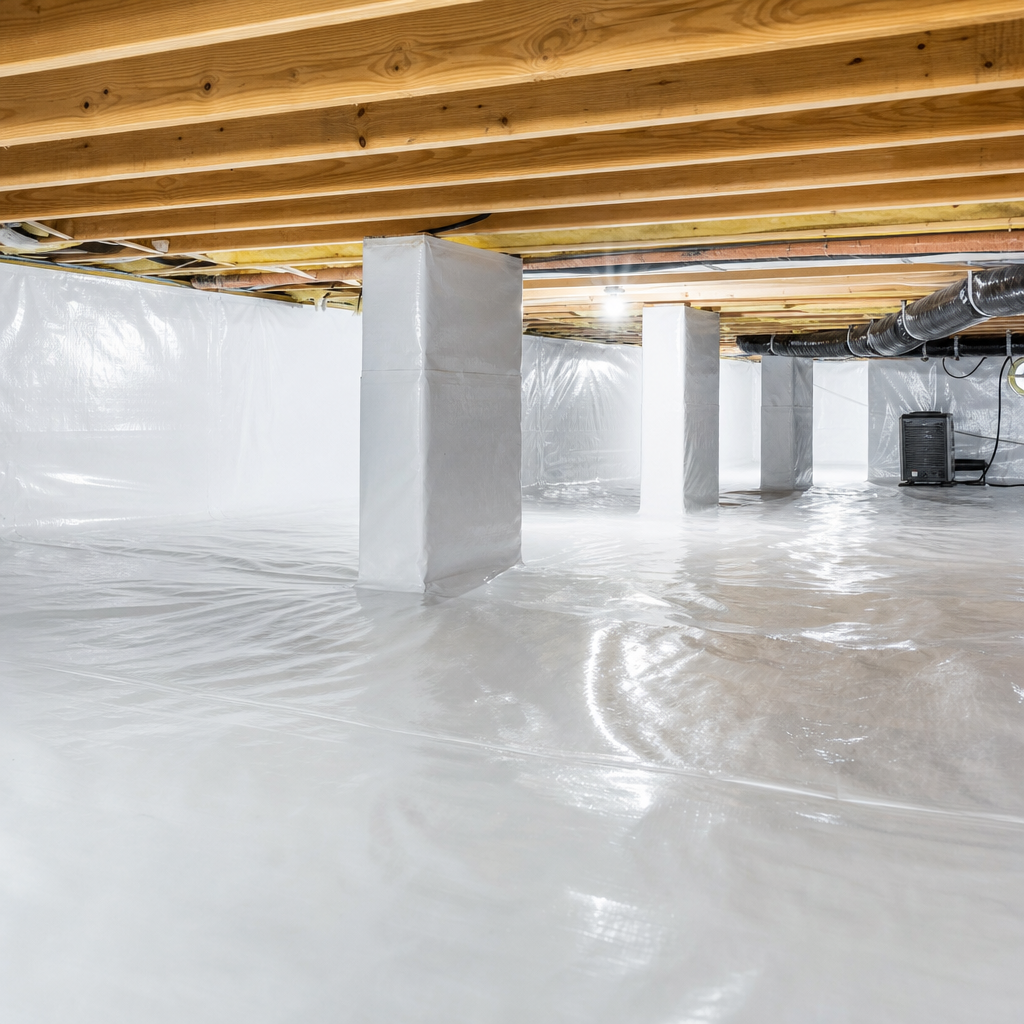
Step 4: Encapsulate Crawl Spaces and Install Vapor Barriers
If your home sits on a pier-and-beam foundation, ground moisture is another factor in indoor humidity. As ground water evaporates, moisture can migrate upward through subfloors and into living areas.
Ground Moisture Evaporation Risks
Uncovered dirt in a crawl space can release substantial amounts of water vapor into a home. In regions where heavy rains alternate with intense heat, damp ground pushes moisture upward through floor joists, which can contribute to warped hardwood floors, musty odors, and higher indoor humidity.
Vapor Barrier Thickness and Sealing Standards
Thin plastic tears easily and does not hold up over time. Crawl space encapsulation benefits from durable materials and careful installation:
- Lay thick ground covers: Use a puncture-resistant, 12-to-20 mil reinforced polyethylene membrane across the entire dirt floor.
- Run barriers up foundation walls: Extend the membrane at least 6 to 12 inches up foundation walls and support piers, fastening and sealing the edges securely.
- Tape all seams: Overlap sheets by at least 12 inches and seal joints with heavy-duty vapor tape to create a continuous moisture barrier.
Step 5: Compare Moisture Control Solutions and Building Envelope Upgrades
Need correct home humidity?
We’re available now — call for a fast, free estimate.
Homeowners often turn to standalone dehumidifiers or larger AC units when struggling with high indoor humidity. Comparing these approaches against building envelope upgrades highlights differences in operating approach and long-term effectiveness.
Evaluating Insulation Upgrades, Dehumidifiers, and Standard HVAC
Portable dehumidifiers pull moisture out of indoor air, but they generate internal heat and consume electricity. Oversized air conditioners may cool rooms too quickly to dehumidify effectively. Air sealing and proper insulation, by contrast, can help reduce moisture intrusion before it enters the living space.
| Feature | Portable Dehumidifiers | Oversized HVAC Units | Building Envelope Sealing |
|---|---|---|---|
| Approach | Removes moisture from indoor air | Cools air but may short-cycle | Helps reduce outdoor air and moisture intrusion |
| Impact on Electric Bills | Increases electricity consumption | High peak demand draw | Helps reduce overall heating and cooling demand |
| Coverage | Single rooms or localized zones | Potential for uneven temperatures | Improves consistency across living zones |
Cost vs. Long-Term Efficiency Tradeoffs
Mechanical fixes carry recurring energy and equipment maintenance costs. Envelope improvements, such as attic air sealing, upgraded insulation, and crawl space vapor barriers, can help reduce thermal and moisture loads, supporting lower summer cooling needs and improved winter comfort.
Step 6: Balance Mechanical Ventilation and Long-Term Humidity Maintenance
Once you seal the building envelope, mechanical ventilation ensures fresh air circulates properly throughout the home.
Smart Thermostats and Dehumidification Controls
The Home Ventilating Institute recommends that intermittent bathroom exhaust fans move at least 50 CFM of air and vent directly outside through dedicated ductwork, never into the attic. In addition, modern smart thermostats with humidity control can run your HVAC blower at lower speeds during high-humidity periods to support moisture removal without over-cooling your living space.
Routine Envelope Inspections
As recommended by Super Green Insulation Austin, keep your home’s moisture barriers working properly with a simple annual inspection routine:
- Check attic insulation for thin spots, settling, or disruption from past service visits.
- Inspect crawl space vapor barriers to confirm seams remain taped and free of standing water.
- Examine weatherstripping around attic access points and replace worn seals.
- Make sure bathroom and kitchen exhaust ducts stay tightly connected and vent freely to the outdoors.
Frequently Asked Questions About Correct Home Humidity
What is the ideal humidity level for a home?
A healthy, comfortable indoor relative humidity level sits between 30% and 50%. Health Canada recommends keeping humidity below 50% in the summer to reduce the risk of mold growth. In winter, maintaining levels between 30% and 35% helps prevent moisture from condensing on cool window panes and exterior wall framing.[5]
How does attic air sealing help lower indoor humidity?
Closing attic bypasses limits warm, humid attic air from leaking down into conditioned living areas. This can reduce the latent moisture load in the home, allowing your existing HVAC system to maintain comfortable indoor conditions more effectively.
Can insulation and air sealing help manage indoor humidity?
Yes. Insulation and air sealing can help manage moisture and comfort by minimizing unconditioned air leakage and thermal transfer through the building envelope.
Why does my house feel humid even when the AC is running?
If your AC cools the house quickly but leaves the air feeling sticky, the unit may be short-cycling or dealing with unconditioned air leakage. When humid outdoor air enters the home, the thermostat may satisfy the sensible temperature setpoint before the AC coil has run long enough to pull adequate moisture from the air. Air sealing and proper insulation can help mitigate these envelope air leaks.
Need correct home humidity?
We’re available now — call for a fast, free estimate.
Sources
- United States Government Accountability Office – gao.gov (2006)
- 1 – epa.gov
- Ventilation for Acceptable Indoor Air Quality – ashrae.org
- Recommended Indoor Humidity Levels: EPA, CDC & ASHRAE – indoorhumidity.com
- RELATIVE HUMIDITY INDOORS: FACTSHEET – publications.gc.ca (2007)
Related reading: Home Humidity Levels in Winter | Call Now-10% Off | Same-Day Service | Free Estimate
Related reading: Home Humidity in Winter – 10% Off & Free Estimate – Same-Day Service
Related reading: Reducing Humidity in Home | Call Now-10% Off | Same-Day Service | Free Estimate
Frequently Asked Questions
How can I tell whether my high humidity is coming from the attic or the crawl space?
Placing hygrometers on different levels helps identify the source; higher humidity upstairs during peak afternoon heat indicates solar vapor drive from the attic, while muggy lower levels or cupped floorboards point to crawl space moisture. Homeowners in Central Texas can contact Super Green Insulation Austin to diagnose these hidden air leaks and moisture pathways.
Why is building envelope sealing more effective than running portable dehumidifiers?
Portable dehumidifiers only treat indoor air reactively, generating excess heat and raising electricity bills while outdoor moisture continuously seeps inside. Upgrades like attic air sealing and heavy-duty crawl space vapor barriers from Super Green Insulation Austin stop moisture at the boundary, permanently reducing the latent load on your air conditioner.
How can I get my home evaluated for attic moisture and air leaks?
You can schedule a free in-home moisture and insulation assessment or call Super Green Insulation Austin for a same-day inspection. A specialist will evaluate your attic bypasses, thermal barriers, and foundation sealing to stabilize indoor humidity and lower cooling costs.
About the author
 |
Sarah Jenkins Sarah Jenkins is an insulation specialist with over 8 years of experience in residential and commercial energy efficiency. Holding a Bachelor of Science in Environmental Science from Texas A&M University, she focuses on practical solutions for climate control in Central Texas. Her expertise lies in rapid-response attic and crawl space restoration, helping Austin property owners reduce utility costs and improve indoor comfort. |