
Quick Summary
High inside home humidity in Central Texas is frequently driven by building envelope failures, allowing outdoor moisture and ground dampness to infiltrate living spaces through unsealed attics and crawl spaces. Super Green Insulation Austin addresses these root-cause moisture issues by deploying precision attic air sealing, high-performance insulation, and heavy-duty crawl space vapor barriers to stabilize indoor relative humidity. Readers will understand how to maintain the recommended 30% to 50% moisture target and can schedule a free on-site attic and crawl space evaluation to protect their home.
Inside Home Humidity: How to Lower It Fast and Save
If your home feels sticky, muggy, or damp even when the air conditioner runs all day, you are dealing with an elevated inside home humidity problem. In Central Texas, where triple-digit summer heat pairs with heavy atmospheric moisture, treating humidity purely as an air conditioning issue often leaves homeowners frustrated and stuck with sky-high electric bills.[5]
When outdoor air heats up, warm attic air can allow moisture to enter living areas through unsealed ceiling penetrations. At the same time, unsealed crawl spaces can allow ground moisture to migrate upward into the home. To permanently bring your moisture levels under control, you need a balance of smart air conditioning practices and targeted building envelope protection.
Why Indoor Moisture Spikes in Central Texas
Austin-area summers create conditions where outdoor heat and humidity place high demands on the building envelope. As heat builds in unconditioned attics, warm and moisture-laden air can move through drywall seams, recessed can lights, electrical boxes, and attic hatch doors into conditioned spaces.
Even a top-tier air conditioning unit can struggle if your ceiling plane allows damp air to leak indoors as the system works to remove it. Sealing these bypasses helps block moisture at the structural boundary, giving your cooling system the support it needs to regulate indoor air effectively.
Key Takeaways for Managing Indoor Moisture
- Target range: While a broader range of 40% to 60% relative humidity is often cited for general comfort and respiratory health, maintaining an indoor target between 30% and 50% is standard for home moisture management. Health Canada specifically suggests keeping indoor levels below 50% in the summer and between 30% and 35% during colder winter months.
- Danger threshold: Indoor humidity that consistently stays above 60% is generally considered too high, creating an environment where dust mites thrive, building materials absorb moisture, and mold can start to form.
- The envelope factor: While air conditioners pull moisture from the air during cooling cycles, sealing attic penetrations and addressing crawl spaces helps prevent outdoor moisture from entering your living space. Active monitoring and moisture control remain essential for a healthy home.
Quick Comparison: Moisture Control Methods
In a HUD field study evaluating residential indoor environments, average indoor relative humidity levels were observed settling in the high 40s to low 50s percent range. Reaching and maintaining an appropriate baseline requires the right tool for the job.[1]
| Method | Primary Mechanism | Stops Attic Moisture Migration? | Best Application |
|---|---|---|---|
| Building Envelope Air Sealing | Passive physical barrier | Yes (blocks entry at source) | Homes with hot, leaky attics and drafty ceiling planes |
| Crawl Space Vapor Retarder | Passive ground barrier | No (blocks soil evaporation) | Pier-and-beam foundations and open subfloors |
| Central Air Conditioning | Active cooling and moisture extraction | No (treats indoor air only) | Daily temperature and latent heat management |
| Whole-Home Dehumidifier | Active moisture removal without overcooling | No (treats indoor air only) | Mild, humid spring and fall shoulder seasons |
1. Target the Recommended Inside Home Humidity Range
Tracking your indoor climate starts with knowing your numbers. While a broader range of 40% to 60% relative humidity supports general respiratory comfort and reduces the survival time of certain airborne pathogens, standard residential guidance typically recommends maintaining indoor humidity between 30% and 50%.[4]
When relative humidity consistently sits above 60%, your home will begin showing subtle warning signs:
- Air feels heavy, clammy, or noticeably warmer than the thermostat reading suggests.
- Musty smells develop in closets, laundry areas, or baseboards.
- Condensation forms on window glass, metal supply vents, or toilet tanks.
- Hardwood floors cup slightly, or interior doors stick in their frames.
You can monitor these levels easily using a low-cost digital hygrometer placed in central living spaces away from direct sunlight and bathrooms.
2. Stop Attic Vapor Drive and Air Infiltration
Need inside home humidity?
We’re available now — call for a fast, free estimate.
In hot climates, the ceiling plane between your living area and your attic is an important moisture boundary. Warm, humid attic air can find openings and migrate into the cooler, conditioned living space below.
Standard fiberglass batts do not stop air movement. Humid air can slip through porous insulation fibers. Proper protection requires a two-step approach:
- Precision air sealing: Technicians use expanding foam and specialized fire-rated sealants to close gaps around electrical wiring, plumbing stacks, drywall joints, and recessed light fixtures before adding insulation.
- Uniform blown-in insulation: Adding a consistent layer of blown cellulose or fiberglass over sealed framing prevents hot spots on your drywall, keeping surface temperatures uniform and stopping condensation risks.
Super Green Insulation Austin specializes in diagnosing and sealing attic air leaks across Central Texas homes, keeping outdoor humidity from migrating through your ceilings.
3. Cover Crawl Spaces with Heavy-Duty Vapor Barriers
Many older and historic homes in Austin, West Lake Hills, and surrounding areas rest on pier-and-beam foundations. While this style provides practical access to plumbing, exposed dirt beneath the home acts as an open source of ground water evaporation.
Unsealed soil in a crawl space can allow ground moisture to rise into the structure above. Wooden floor joists, subflooring, and finished hardwood floors can absorb this moisture, which may contribute to cupping boards, musty odors, and conditions favorable to wood decay over time.
Laying down a continuous, heavy-mil poly vapor barrier across the dirt floor stops ground dampness from rising into your subfloor assembly. Securing and sealing the seams protects the structural integrity of your foundation framing and significantly lowers humidity inside your living areas.
4. Address Short-Cycling and Oversized Air Conditioners
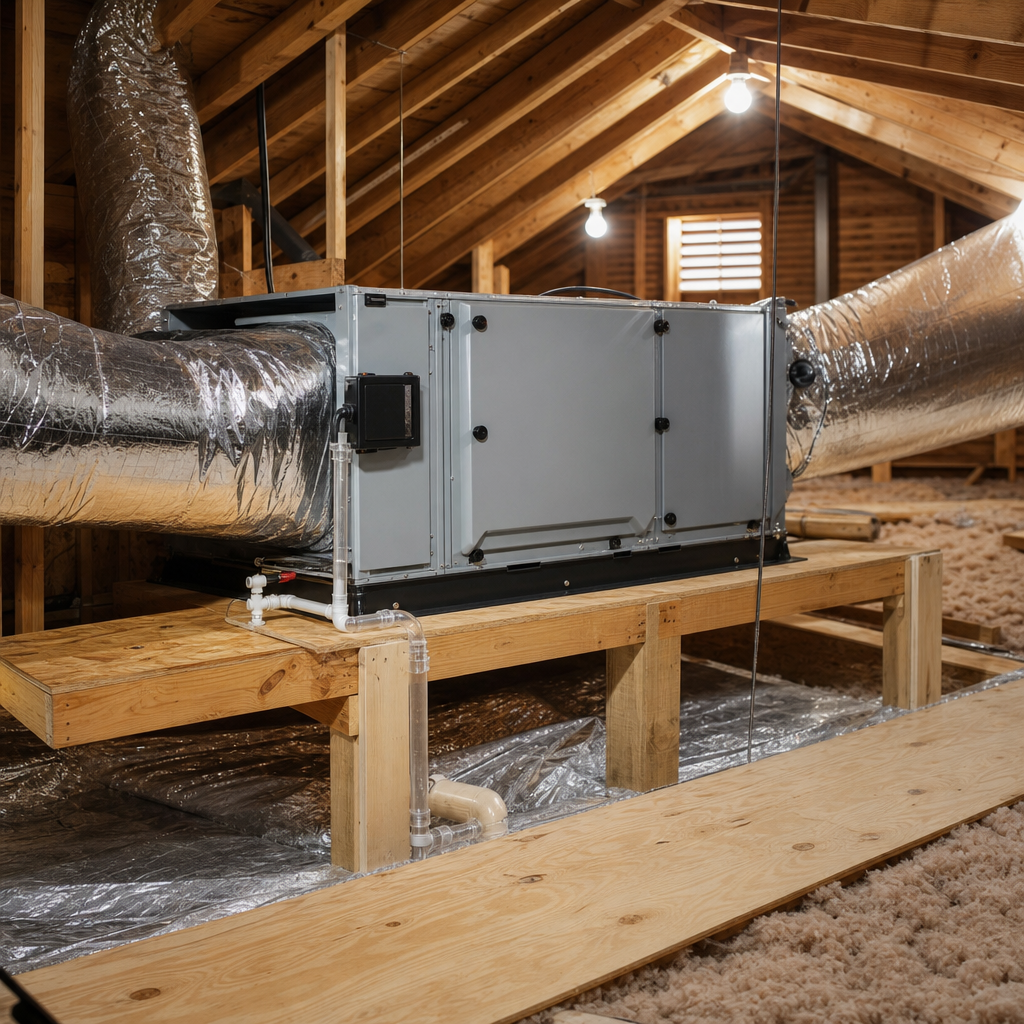
It is a common misconception that a larger air conditioning unit is always better. In reality, an oversized system cools your home down too fast, satisfies the thermostat in five to ten minutes, and shuts down before it has time to remove latent moisture from the air.
Air conditioners need steady run cycles of 10 to 15 minutes across cold evaporator coils to condense moisture out of the air stream and send it down the condensate drain. When a system short-cycles, the room temperature drops quickly, but the air stays humid, leaving you with that cold, clammy basement feel.
Sealing your thermal envelope stabilizes the heat load on your home, helping properly sized HVAC units run the long, steady cycles necessary for effective moisture removal.
5. Optimize Kitchen and Bathroom Exhaust Ventilation
Everyday domestic routines add moisture to indoor air. Activities like hot showers, boiling water on the stove, running dishwashers, and washing clothes release humidity into your living space.
Make sure your exhaust fans are operating properly by following these best practices:
- Run bathroom exhaust fans during showers and let them run for 15 to 20 minutes afterward to clear residual humidity.
- Always use your range hood fan when boiling water, steaming food, or simmering liquids on the cooktop.
- Verify that your exhaust ducts vent directly through an exterior wall or roof cap, never into an open attic space. Dumping warm, humid bathroom air into an attic creates conditions that encourage mold growth on roof decking.
6. Inspect and Seal Leaky Attic Ductwork
Need inside home humidity?
We’re available now — call for a fast, free estimate.
When flexible ductwork runs through an unconditioned, hot attic, tears, loose connections, and unsealed joints can undermine your entire cooling process by allowing conditioned air to escape and unconditioned air to enter.
Duct leaks create dual moisture problems:
- Return duct leaks: Holes on the return side draw hot, damp attic air directly into the air handler, injecting humidity straight into your supply registers.
- Supply duct leaks: Air blowing out of torn supply runs into the attic depressurizes the living space below, which can pull humid outdoor air inside through cracks in your walls, windows, and doors.
Sealing duct joints with professional mastic paste and replacing degraded duct insulation stops this pressure imbalance and keeps moisture out of your air stream.
7. Deploy Dedicated Whole-Home Dehumidification
During Central Texas spring and fall shoulder seasons, outdoor temperatures can hover in the mild 70s while humidity levels push past 80%. Because your home is comfortable in terms of temperature, your air conditioner rarely turns on. Without AC run time, indoor relative humidity climbs unchecked.
A dedicated whole-home dehumidifier ties into your existing ductwork and operates based on relative humidity rather than temperature. When the system detects moisture levels rising above your set point (such as 50%), it extracts water vapor independently without overcooling your home. In a Department of Energy Building America case study, a supplemental dehumidifier maintained indoor relative humidity below 60% for more than 99% of the monitored hours.[2]
8. Schedule a Professional Building Envelope Moisture Assessment
If you have tried adjusting your habits and your home still feels muggy, a professional building science evaluation will pinpoint exactly where air and moisture are breaking through your home’s boundary.
A professional moisture and thermal evaluation typically includes:
- Thermal imaging: Infrared cameras locate missing insulation, hidden air leaks, and cold spots where condensation risks are high.
- Moisture mapping: Moisture meters evaluate wood joists, attic framing, and subflooring to find hidden water accumulation.
- Envelope inspection: Technicians inspect the attic floor plane, duct connections, and crawl space conditions to build a targeted repair scope.
Super Green Insulation Austin provides on-site assessments for homeowners and property managers across Austin, West Lake Hills, Pflugerville, Del Valle, and surrounding communities. By addressing root-cause insulation and air leak issues, you can stop fighting humidity symptoms and enjoy a dry, comfortable home year-round.
Frequently Asked Questions About Inside Home Humidity
Is 60% humidity too high inside a house?
Yes. Indoor humidity sustained at or above 60% is generally considered too high because it creates conditions that support mold growth, dust mite proliferation, and moisture damage to building materials. While broader comfort and health guidelines recognize 40% to 60% relative humidity, residential targets typically advise keeping indoor levels between 30% and 50%, with Health Canada suggesting levels below 50% in summer and 30% to 35% in winter.[3]
Why does my house feel humid even with the AC running?
This usually happens for several reasons: your air conditioner may be oversized and short-cycling (cooling the air without running long enough to extract moisture), unsealed ceiling penetrations may be allowing humid attic air to migrate downward, or unsealed crawl spaces may be releasing ground moisture upward into the home.
How does attic insulation affect indoor humidity levels?
Insulation works alongside air sealing to control surface temperatures and air movement. When ceiling bypasses are sealed and covered with blown-in insulation, hot attic air cannot easily leak into conditioned spaces, preventing moisture accumulation and stabilizing indoor relative humidity.
How can I schedule an on-site moisture evaluation with Super Green Insulation Austin?
You can contact Super Green Insulation Austin directly by phone or through our website to set up a comprehensive attic and crawl space evaluation. Our team provides clear findings, transparent estimates, and targeted air sealing solutions to resolve moisture issues fast.
Need inside home humidity?
We’re available now — call for a fast, free estimate.
Sources
- INDOOR HUMIDITY LEVELS AND ASSOCIATIONS WITH … – pmc.ncbi.nlm.nih.gov (2024)
- Indoor humidity levels and associations with reported … – pubmed.ncbi.nlm.nih.gov (2022)
- INDOOR HUMIDITY LEVELS AND ASSOCIATIONS WITH … – stacks.cdc.gov (2022)
- Monitoring of Internal Moisture Loads in Residential … – huduser.gov
- Guidance for indoor air quality professionals – Canada.ca – canada.ca (2023)
Related reading: Home Humidity Levels in Winter | Call Now-10% Off | Same-Day Service | Free Estimate
Related reading: Home Humidity in Winter – 10% Off & Free Estimate – Same-Day Service
Related reading: Correct Home Humidity – 10% Off & Free Estimate – Same-Day Service
Frequently Asked Questions
Can improving attic insulation and air sealing lower electric bills alongside reducing inside home humidity?
Yes, sealing ceiling bypasses prevents hot, moisture-laden attic air from infiltrating your conditioned rooms, which significantly reduces the latent cooling load on your HVAC system. Super Green Insulation Austin installs precision air sealing and high-performance insulation so your air conditioner can run optimal cycles without wasting energy on constant moisture removal.
How does ground moisture in a pier-and-beam crawl space enter living areas?
Exposed soil beneath a home constantly releases water vapor that rises and gets absorbed by wooden subflooring, framing joists, and floorboards. Installing a heavy-duty crawl space vapor barrier seals off this evaporation at the ground level, stopping dampness from elevating your inside home humidity.
What happens during a professional attic and crawl space moisture evaluation?
A technician from Super Green Insulation Austin uses thermal imaging and moisture meters to locate hidden air leaks, unsealed penetrations, and damp structural framing. This comprehensive inspection identifies the exact building envelope failures causing high inside home humidity and provides a targeted roadmap for permanent remediation.
About the author
 |
David Wallace David Wallace is an insulation specialist with over 15 years of experience in residential and commercial energy efficiency. He holds a Bachelor of Science in Construction Management from the University of Texas at Austin and is a certified Building Performance Institute (BPI) professional. David is passionate about helping property owners optimize their insulation for comfort and long-term cost savings. |